
Table of Contents
- Build Strong Online Visibility
- Reach the Right Audience
- Cost-Effective Marketing
- Improve Brand Credibility
- Generate Quality Leads
- Increase Customer Engagement
- Measure Marketing Performance
- Stay Competitive
- Support Business Growth
- Deliver Better Return on Investment
- Grow Your Small Business with ROILift
- FAQs
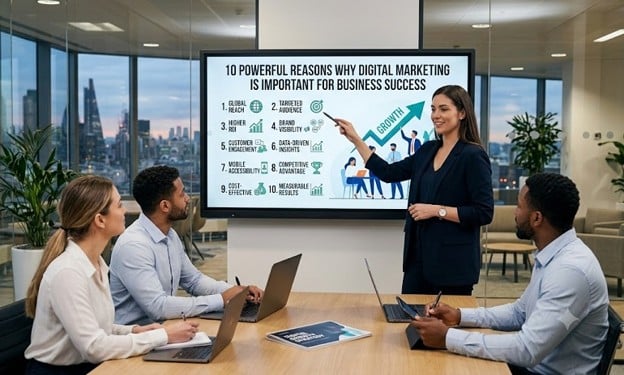
Digital marketing isn’t optional anymore – it’s how small businesses get found, get chosen, and get repeat customers. This piece breaks down where the real value comes from and what to actually prioritize if you’re working with a limited budget.
Here’s the reality most small business owners run into eventually: customers aren’t walking past your storefront and deciding to come in anymore. They’re Googling you first, checking reviews. Scrolling your Instagram to see if you look legit. If that digital trail doesn’t exist – or worse, looks abandoned – you lose the sale before you even know there was a chance at one. That’s the blunt version of why digital marketing is important for small businesses, and everything below just fills in the details.
Build Strong Online Visibility
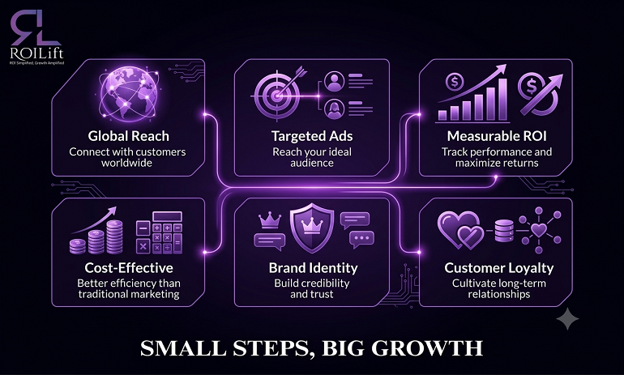
If your business doesn’t show up when someone searches for what you offer, you might as well not exist to that customer. SEO, a claimed Google Business Profile, and content that actually answers questions people are typing into search bars – these are what put you in front of people at the exact moment they’re looking. At ROILift, this is usually where we start with new clients, because visibility is the foundation everything else builds on.
Reach the Right Audience
Old-school advertising was a numbers game – blast the message out and hope enough of the right people saw it. Digital marketing flips that. You may target by region, age, interests, even search behavior, which ensures your budget is spent on individuals who are actually inclined to buy, not a random slice of the population. This is a large part of why digital marketing is so vital to small businesses in particular – you don’t have the money to waste on people who were never going to convert.
Cost-Effective Marketing
A billboard costs the same whether it works or not. A digital campaign tells you within days whether it’s working, and you can pull the plug or double down accordingly. SEO, PPC, social ads – all of it gives you more control over where your money goes than traditional channels ever did, which matters a lot when your marketing budget is measured in hundreds, not tens of thousands.
Improve Brand Credibility
People trust what looks cared for. A clean website, real reviews, content that shows you know your industry – these things quietly tell a customer “this business is legitimate” before you’ve said a word to them directly. Skip this stuff, and you’re asking customers to take a leap of faith that your competitors aren’t asking for.
Generate High-Quality Leads
There’s a difference between traffic and leads, and a lot of businesses learn this the hard way. A well-optimized site and targeted campaigns bring in people who already have some intent – they’re not just browsing; they’re closer to buying. That’s exactly why digital marketing is important for small businesses trying to make every dollar count: fewer wasted conversations, more real customers.
Increase Customer Engagement
Social media, email, comment sections – these aren’t just broadcast channels; they’re conversations. Someone asks a question in your comments, you answer it publicly, and now three other people who were on the fence just saw you handle it well. That kind of direct back-and-forth builds relationships traditional advertising never could.
Measure Marketing Performance
You can watch exactly what’s working, down to which headline got more clicks or which ad spent too much for too little return. That level of visibility lets you adjust mid-campaign instead of finding out three months later that the whole thing flopped.
Stay Competitive
A ten-person local business can outrank a national chain for a specific local search term if the SEO and content strategy are done right. That’s not a fluke – it’s one of the more concrete examples of why digital marketing is important for small businesses trying to hold their ground against bigger competitors with bigger budgets.
Support Long-Term Business Growth
The compounding effect is real here. A blog post you wrote a year ago can still be pulling in traffic today. Reviews accumulate. Your domain authority builds. None of this happens overnight, but it creates a kind of momentum that paid ads alone never will – once you turn off the ad spend, the traffic stops. Organic growth doesn’t work that way.
Deliver Better Return on Investment
Every dollar spent digitally leaves a trail – you know what it bought you. That data lets you cut what’s not working and pour more into what is, which over time pushes your ROI in a direction flat, untracked advertising never could. At ROILift, this is the whole point of pairing data with strategy: not just running campaigns, but making them earn their keep.
Grow Your Small Business with ROILift
None of this works as a one-size-fits-all playbook – the right strategy depends on your industry, your customers, and where you’re starting from. If you’re ready to build real visibility, bring in leads that actually convert, and grow without guessing, we can help. Visit ROILift to see how a dedicated USA SEO company approach can move the needle for your business.
FAQs
Why is digital marketing important for small businesses?
Because it puts you in front of customers who are actually looking for what you sell, without requiring the budget of a national brand to compete.
Which digital marketing strategy works best for small businesses?
Usually a mix – SEO and local SEO for the long game, content marketing to build trust, and PPC or social ads when you need faster results.
How long does digital marketing take to show results?
SEO is a slow burn, often several months before you see real movement. PPC and social ads can bring traffic within days, but that traffic disappears the moment you stop paying for it.
Can digital marketing help local businesses?
Absolutely – arguably it helps them the most. Local SEO and an optimized Google Business Profile are often the single highest-leverage moves a local business can make.
Why should I choose ROILift for digital marketing?
Because we build strategies around your actual business goals, not a template – combining SEO, content, and paid channels in a way that’s built to grow visibility, leads, and revenue over time.