


Table of Contents
Key Takeaways
- One bad review left unanswered can cost you more customers than a mediocre ad campaign ever will – reputation math is brutal like that.
- The businesses that treat reputation as an ongoing practice, not a fire drill, are the ones customers trust before a single conversation happens.
Somebody decides whether they trust your business roughly ninety seconds before they ever pick up the phone or click “book now” – and that decision is almost entirely shaped by what shows up when they Google you. A three-star average with unanswered complaints tells a different story than a four-point-eight with thoughtful responses sprinkled throughout, even if the underlying businesses are equally good. That gap is exactly what an online reputation management expert is paid to close. Understanding what that role actually involves – beyond just “handling bad reviews” – is where most businesses need to start.
Why Online Reputation Matters?
People don’t call you first anymore. They read about you first. Reviews, star ratings, how you’re discussed on social media, what comes up on page one of search results – all of it gets weighed before anyone picks up the phone. At ROILift, a good chunk of our work with clients starts here, because no amount of paid advertising fixes a reputation that’s quietly working against you in the background.
Monitor and Manage Brand Mentions
Here’s what surprises a lot of business owners: your brand is being talked about in places you’re not checking. Yelp, Facebook, industry forums, niche subreddits, Google reviews – conversations happen across all of it, often without you ever seeing them. An online reputation management expert keeps eyes on that entire landscape, catching a frustrated customer’s post before it festers into something bigger, and making sure the happy customers get a genuine thank-you instead of silence.
Build Customer Trust
Trust doesn’t come from a tagline – it comes from evidence. Real reviews that read as real people wrote them, responses that sound human rather than copy-pasted, a track record visible to anyone who looks. That’s what actually moves someone from “maybe” to “yes.” An online reputation management expert builds toward that steadily, not through some overnight trick, because trust earned quickly tends to evaporate just as fast.
Handle Negative Reviews Professionally
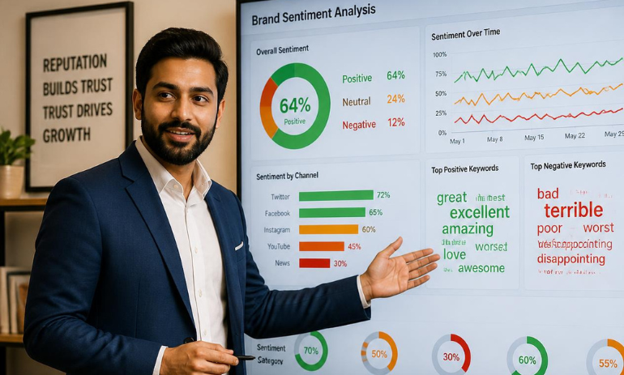
Every business gets a bad review eventually – even the great ones. What separates businesses that recover from ones that don’t is the response. Ignore it, and it sits there as permanent evidence you don’t care. Respond defensively, and you look worse than the original complaint. Respond with genuine acknowledgment and a real path to resolution, and you often turn a skeptic into someone impressed you handled it well. At ROILift, we write these responses case by case – no template works for a botched delivery and a misunderstanding about pricing in the same voice.
Improve Search Engine Visibility
Reputation and SEO aren’t separate conversations, even though people often treat them that way. Google reads review volume, review recency, and overall sentiment as trust signals, and those signals bleed directly into local rankings. An online reputation management expert who understands this will coordinate reputation work with SEO strategy rather than running them in isolation, so when someone searches your business name, what they find actually helps rather than raises questions.
Strengthen Brand Authority
Once a business builds a genuinely strong reputation, something compounds: referrals pick up, partnerships get easier, competitors start looking worse by comparison even if nothing about them changed. That’s the long game here – reputation work isn’t really about damage control, though that’s the part people notice first. It’s about becoming the obvious choice before a customer even compares options.
Partner with ROILift to Protect Your Brand
Your reputation isn’t something to handle reactively, scrambling every time a bad review lands. At ROILift, we treat it as an ongoing discipline – combining reputation management, SEO, and real customer engagement into one strategy instead of three disconnected efforts. If your online image needs sharpening, or you just want fewer surprises when someone Googles your name, reach out. Our digital marketing services in the USA cover exactly this kind of work, built around what actually moves the needle for your specific brand.
FAQs
What does an online reputation management expert do?
They keep constant watch over how your brand shows up online – reviews, mentions, search results – and step in to manage feedback and promote the content that represents you accurately.
Why is online reputation management important?
Because customers decide whether to trust you long before they talk to you, and that decision is shaped almost entirely by what they find searching your name.
Can online reputation management improve SEO?
Yes – reviews and consistent positive engagement feed directly into how search engines assess trust, which shows up in better local search performance over time.
How long does it take to improve an online reputation?
It varies with where you’re starting from, but most businesses start seeing real, visible shifts within a few months of consistent effort – not overnight, but not glacial either.
Why should I choose ROILift for reputation management?
Because we build strategies around your actual situation instead of running the same playbook for every client, and we tell you honestly what’s working and what isn’t along the way.