

Table of Contents
Nowadays, whenever you open LinkedIn or check out articles, “SEO is Dead “ is one phrase that floats around everywhere. But all of this is a hoax or half-said truth as SEO services still holds it relevancy today.
With the introduction of AEO and GEO optimization, there has been a significant shift in the business approach to enhance online visibility. Now the main goal is to attain an AI overview that is replaced with former feature snippet.
Instead of stating that the end of SEO is near, the rise of GEO has taken online growth to new heights.
What is GEO and AEO All About?
AEO involves organizing and enhancing content to ensure that search engines and AI tools deliver clear, succinct, and authoritative responses to user queries.
The goal is not only to land on the first page of organic search results, but to appear at the top of the first page in the other search results as well, including for featured snippets, voice search, and AI-generated search results.
AEO focuses on:
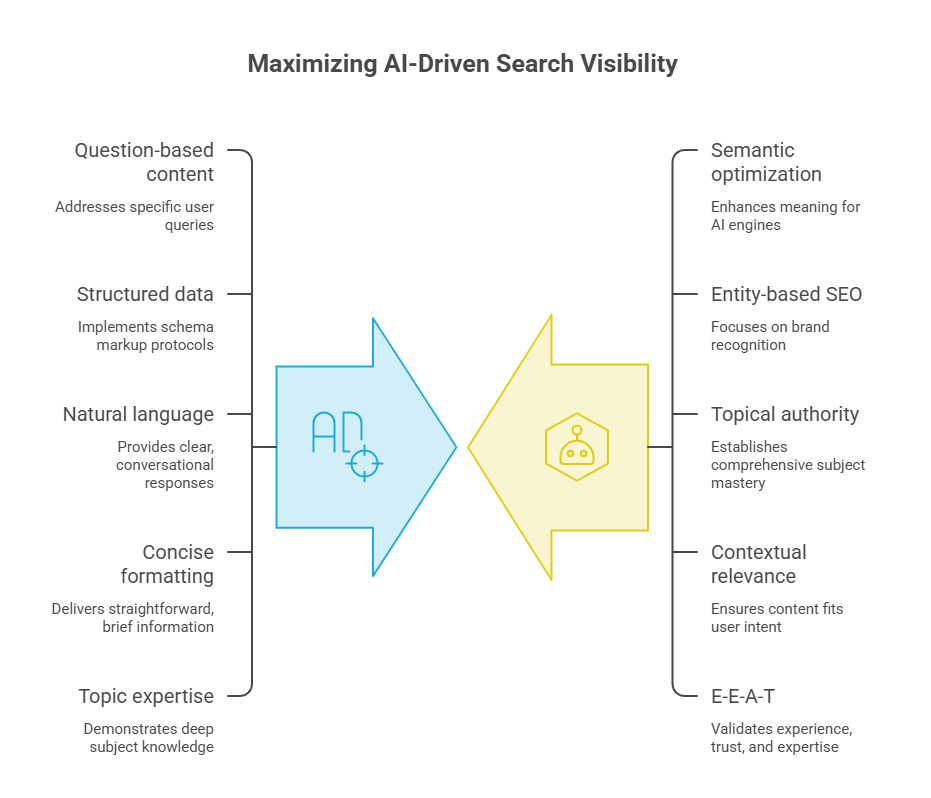
- Question-based content.
- Use of structured data and/or schema markup.
- Helpful answers and natural language.
- Straightforward and concise responses.
- They have expertise and topic expertise in the area.
As voice assistants and AI-driven search technologies become more prevalent, AEO has become a crucial part of contemporary SEO services.
On the other hand, GEO is another level of optimization that focuses on AI-powered search engines that generate content rather than just a list of links.
The majority of search engines are boasting AI overviews that are based on overall credibility and online reputation of a brand. Platforms like Amazon’s S3 service and Google’s API are now summarizing information and displaying AI-based overviews that are replacing traditional search results.
GEO wants to make a brand’s content a reliable resource for any of these generative engines when building answers.
The main field of GEO is:
- Semantic content optimization
- Entity-based SEO
- Building topical authority
- Contextual relevance
- E-E-A-T – Experience, Expertise, Authoritativeness, and Trustworthiness
- Structured and easily understandable content
- Comprehensive coverage of topics
With the increasing prominence of AI overviews, the emphasis on featured snippets has decreased, and GEO has emerged as a significant advancement in conventional search optimization tactics.
It’s an Expansion Not the Dead End for SEO
Many might interchange the basic relevancy of SEO with AEO and GEO strategy, but the better way to address this is by regarding it as an expansion.
Businesses still need to emphasize SEO rankings and overall traffic with the AEO and GEO.
By combining GEO and AEO with their SEO services, businesses can improve their visibility not just on traditional search engines but also within AI-created summaries, voice searches, and conversational interfaces.
What is Changed in Strategy?
When you avail AEO or GEO services from the best digital marketing services in the USA, there are certain fundamental shifts.
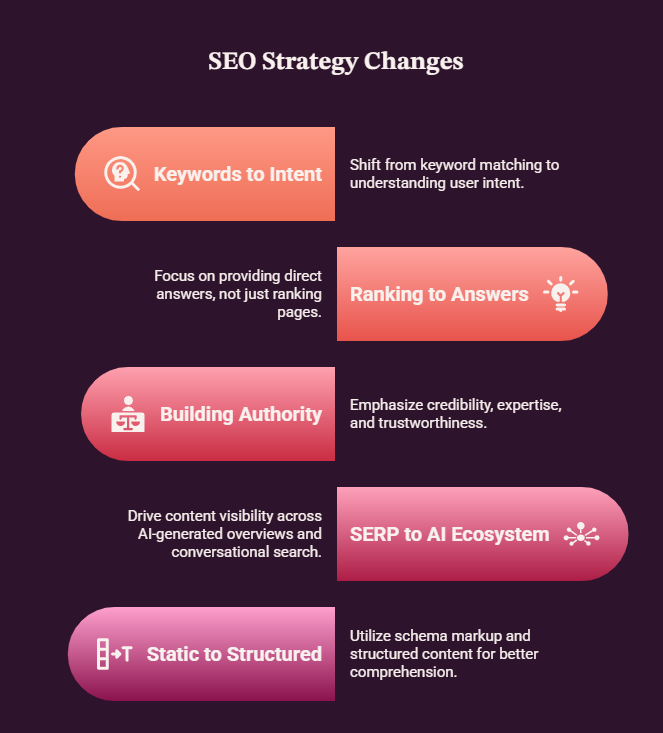
From Keywords to Search Intent
In the past, keywords were all that mattered with SEO; today, the emphasis is on responding to what a user is looking for through a variety of tactics related to user intent and relevance. The creation of content will be based on the purpose of answering questions raised by users, not just matching what someone types in or searches for.
Shit to Ranking Pages to Providing Answers
AEO is about providing clear and direct answers rather than beating around the bush with stick. Businesses are now optimizing content to improve the chances of it being included in AI-generated responses, voice search answers, and highlighted snippets.
Building Authority
Backlinks still play an important role, but search engines and AI systems are placing more and more value on credibility, expertise and trustworthiness. This has given rise to a movement toward E-E-A-T, thought leadership and quality content.
SERP Search Engine to AI Ecosystem
When people search, there are now more blue links than just Google’s. GEO tactics are designed to drive content visibility across AI-generated overviews, conversational search engines, and answer engines, including AI voice search to reach the brand across multiple channels.
From Static Content to Structured Information
Schema markup, FAQs, lists, tables, and semantic HTML are gaining more and more significance. Structured content helps AI models and search engines better comprehend and extract information from the content.
Conclusion
Next time you come across a post or article stating SEO is dead, now you know that reality is far different. ROILift has been a remarkable ally for businesses looking for SEO needs and now have fully optimized themselves for GEO services.
As one of the best digital marketing Agency in USA, thriving on both traditional search engines and new artificial intelligence-based systems in today’s constantly evolving digital world. GEO and AEO are not the death knell for search engine optimization; they have taken SEO to a new altitude of excellence.
FAQs
Overall, how is SEO different from GEO and AEO?
SEO mainly targets the ranking and traffic of the website, whereas GEO and AEO are heavily focused on semantic relevancy and establishing authority.
Is AI Overview reducing traffic on the website?
Yes, many businesses have noticed a significant drop in traffic, as the majority of users are clicking on AI Overviews.
Can AEO and GEO replace SEO?
No, SEO acts as the foundational strategy for AEO and GEO and is regarded as an extension of them. Therefore, AEO and GEO cannot replace SEO.
Are backlinks still relevant in 2026?
Yes, backlinks still hold relevance in 2026, as search engines continue to prioritize brand mentions and quality link-building efforts.