

Many brands are spending lots of money allocated for marketing; however, the actual results of those marketing dollars are gradually slipping through the cracks. While Ads are being placed and posted, and dashboards indicate activity, the true level of engagement is nonexistent. Artificial Intelligence has taken over as far as what is visible, credible, and what attracts attention on Digital Platforms. The brands that continue to rely on traditional marketing strategies are not only falling behind -they have become virtually invisible.
A growing concern businesses are facing…
Digital marketing is no longer just about reach or visibility. AI systems now influence how ads are delivered, how content is discovered, and how audiences interact with brands. The problem is not AI itself. The problem is that many businesses are still marketing as if AI is optional.
The solution is not replacing strategy with automation. It is learning how to work with AI tools intentionally. This blog explains how digital marketing USA is evolving, which trends matter most in 2026, and how services like SMO fit into an AI-driven marketing ecosystem.
Table of Contents
What Digital Marketing Looks Like in the Age of AI
Through the use of artificial intelligence technology, digital marketing has advanced from being a primarily broad-based target to forming pinpoint decisions. AI technologies evaluate customer behaviour trends and content performance trends in real-time and have resulted in a transformed digital marketing USA arena for companies operating in competitive markets. In essence, success in marketing is now achieved through meaningful interactions with the customer instead of through the sheer volume of contact made.
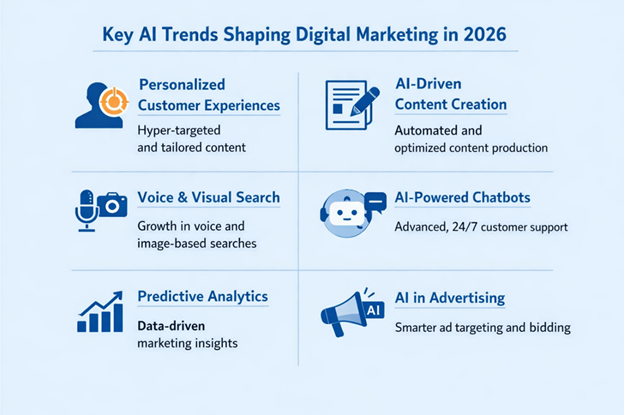
Key AI Trends Shaping Digital Marketing in 2026
- AI-Driven Personalization
The content, ads, and other messages we create with Artificial Intelligence (AI) are tailored based on user activity. When a brand adapts to its customers’ preferences, it’ll come across as being more human and less automated.
- Predictive Analytics
AI helps marketers anticipate trends instead of reacting late. This reduces wasted spend and improves timing.
Platforms give priority to engagement that has impact (also known as ‘meaningful engagement’), which increases the need for an effective Social Media Marketing (SMM) Service in order to maintain ongoing visibility within Social Media Platforms.
Tools That Matter and Tools That Don’t
Not every AI tool improves marketing. Useful tools help with:
- Audience insights
- Content optimization
- Performance forecasting
Tools that promise instant results without a strategy usually fail. Human oversight still matters.
How SMO Services Fit Into AI Marketing

AI decides which posts gain reach, but humans decide what resonates. Strong smo services align content with platform signals while maintaining brand voice.
For businesses investing in digital marketing in the USA, social media optimization now supports:
- Brand trust
- Community engagement
- Content discovery across AI-powered feeds
Practical Tactics Businesses Can Apply
- Ensure that you are delivering clear content.
AI approves content that solves issues in simple and direct way.
- Along with the exposer also focus on engagement.
More important than raw impressions are likes, comments, and saves.
- Be the real you, use data without losing your personality.
AI Insights should assist people in making decisions, without taking the place of human judgment.
What to Measure to Get Real Results
Track:
- Quality of engagement
- Paths to conversion
- Keeping an audience
- How well is digital marketing in the USA doing efforts on different platforms
Numbers should mean something, not just look cool.
Blunders to Avoid
- Relying entirely on automation
- Posting content without a strategy
- Ignoring audience feedback
- Treating SMO services as optional
These mistakes weaken long-term results.
ROILift Preparing for what comes next!
AI has not replaced digital marketing. It has refined it. Brands that adapt with intention stay visible, trusted, and competitive.
ROILift helps brands navigate AI-driven change with purposes of clarity and a strong aim. Our approach to digital marketing in the USA blends smart strategy, data-driven insights, and effective smo services that build real engagement. Sustainable Growth is Our Priority over Quick Wins – be ready to take your marketing to the next level. Ready to adapt your marketing for 2026? Connect with ROILift and move forward with confidence.
FAQs
How does AI impact digital marketing?
AI changes how content is delivered, ranked, and personalized. It helps marketers understand audiences better and optimize campaigns faster.
Is AI content good for SEO?
AI content can support SEO when guided by a strategy. Quality, accuracy, and relevance still matter more than automation alone.
How should digital marketers optimize content for AI search?
Content should be clear, structured, and focused on answering real questions. AI systems favor usefulness over keyword repetition.
Does AI improve marketing ROI?
Yes, when used correctly. AI improves targeting and timing, which reduces wasted spend and increases efficiency.
Is AI digital marketing expensive?
Not necessarily. Costs depend on strategy and scale. Many businesses see better returns by combining AI tools with focused smo services.