

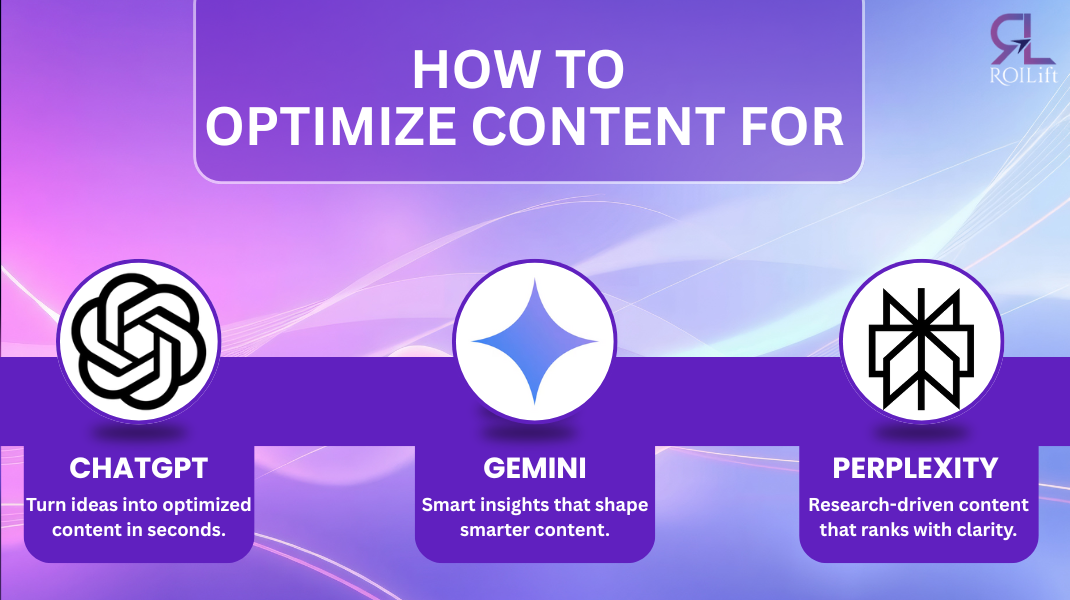
Are you a business owner, and your business is ranking on Google yet quietly disappearing from AI-powered search tools like ChatGPT, Gemini, and Perplexity? Their content exists, but it is not being selected, summarized, or cited. That gap is costing visibility, trust, and real opportunities.
The real problem and the shift happening now…
Search behavior is changing faster than most websites can adapt. People no longer rely only on traditional search results. They ask questions directly to AI tools and expect clear, accurate answers.
The problem is simple: most content is written only for classic search engines, not for how large language models read, understand, and surface information.
The solution is not abandoning SEO. It is expanding it. Optimizing content so it performs well for humans, search engines, and AI systems at the same time.
This guide explains how SEO services for LLMs work, why it matters, and how businesses can apply it correctly without rewriting everything from scratch.
Table of Contents
- 1. What Is SEO for Large Language Models?
- 2. Why SEO for LLMs Matters More Than Ever
- 3. How LLMs Read and Rank Content
- 4. Step-by-Step: How to Optimize Content for ChatGPT, Gemini, and Perplexity
- 5. Common Mistakes to Avoid
- 6. What to Measure and Track
- 7. Conclusion: A smarter way to stay visible
- 9. FAQs
What Is SEO for Large Language Models?
Optimizing for AI-driven language models means writing and structuring all content in order to have a clear, concise way for an AI system to glean information based on context and intent.
Additionally, whereas TSEO is designed to rank higher in the traditional search engines, LSEO is designed to create quality, dependable, and useful information to be accessed by AI systems when providing answers.
This approach directly supports search engine optimization importance because visibility now includes being referenced by AI, not just ranked on a results page.
Why SEO for LLMs Matters More Than Ever
Large language models pull information from multiple sources, summarize it, and present it as a direct answer. If your content lacks clarity or authority, it gets skipped.
For local brands, this is especially critical. Businesses offering seo services for local businesses must ensure their content clearly signals expertise, relevance, and location intent so AI tools can confidently reference them.
Strong LLM optimization improves:
- Brand visibility inside AI-generated responses
- Content trust and authority signals
- Long-term discoverability beyond classic search results
How LLMs Read and Rank Content
LLMs do not scan pages like humans. They look for:
- Clear topic definitions early in the content
- Logical structure with headings and sections
- Direct answers to common questions
- Consistent terminology and context
- Real expertise without exaggeration
Content that wanders, overuses keywords, or relies on fluff is usually ignored.
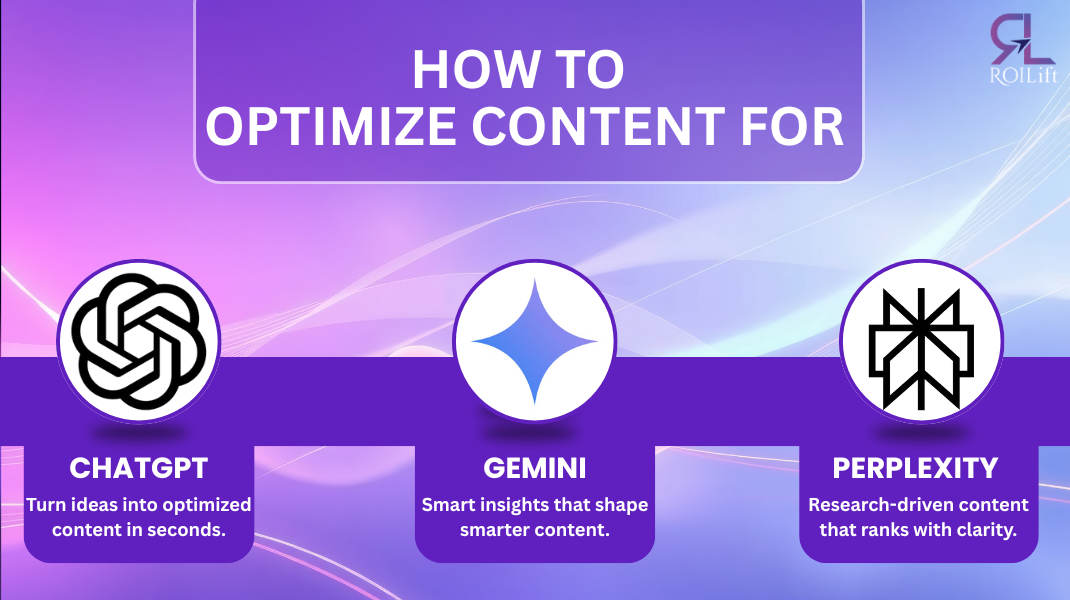
Step-by-Step: How to Optimize Content for ChatGPT, Gemini, and Perplexity
- Start With the Core Question
Each page should clearly answer one primary question. This improves clarity for both readers and AI systems and reinforces search engine optimization importance.
- Write for Understanding, Not Just Ranking
Avoid adding filler content– every paragraph you use should explain something informative and useful. This is necessary for the brands that are offering SEO services for local businesses, because they want a partner whom they can trust to achieve their goal.
- Use Structured Headings
Using clear headings can be helpful: LLMs identify sections and give accurate answers.
- Support Claims With Clear Explanations
AI tools prefer content that explains why something works, not just that it works.
- Maintain Natural Keyword Placement
Use keywords in appropriate locations throughout content so that SEO services are visible as part of the content, yet they do not create a problem by making it more difficult to read.
Common Mistakes to Avoid

- Writing extensive introductions that get in the way of the main point
- Repeating keywords without making them more useful
- Making imprecise assertions without giving a reason
- Ignoring messages that are important to the area
- These make people less trusting and AI less visible.
These make people less trusting and AI less visible.
What to Measure and Track
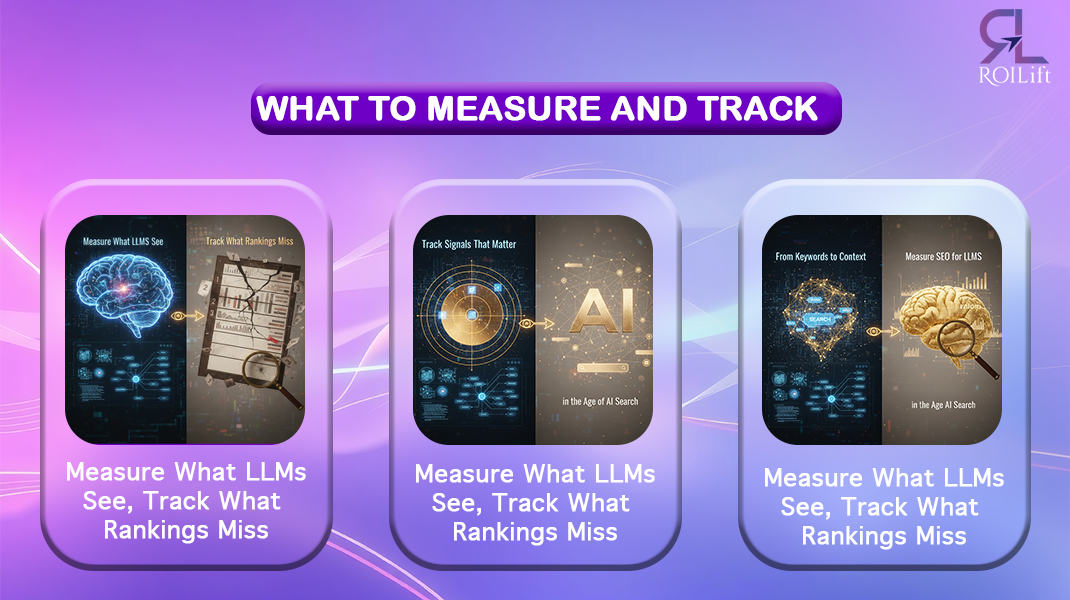
To evaluate LLM-focused SEO, track:
- Brand mentions inside AI-generated answers
- Content clarity and engagement metrics
- Organic traffic influenced by informational queries
- Local discovery improvements tied to seo services for local business
Conclusion: A smarter way to stay visible
The old way of thinking about SEO, the one-dimensional ranking game, is over; today’s SEO is a complete package of clarity, trust, and relevance on every possible platform where someone searches for something.
ROILift develops SEO methods that reflect the way this is being done in reality. Our services provide practical and effective ways to apply SEO successfully to both Google and AI-based services for your local business.
If you want your content recognized by ChatGPT, Gemini, and Perplexity, our team is ready to help. Talk to ROILift and optimize for what’s next!
FAQs
How do I track traffic from AI search engines?
Direct tracking is still limited, but you can monitor referral patterns, branded search growth, and increases in informational traffic. Sudden improvements in content engagement often signal visibility gains from AI-driven tools referencing your content.
Is LLM SEO different from Google SEO?
Yes. Traditional Google SEO focuses on rankings and clicks, while LLM SEO focuses on clarity, context, and answer quality. Both matter, but LLMs prioritize how well content explains a topic rather than where it ranks.
Do backlinks matter for ChatGPT and Gemini?
Backlinks still matter, but differently. They act as trust signals rather than ranking boosters. High-quality, relevant backlinks support authority, which helps AI models decide which sources to reference.
Does structured data help with LLM SEO?
Structured data improves clarity and content organization. While it does not guarantee AI visibility, it helps models understand relationships between topics, entities, and key information more accurately.
Does Gemini use Google ranking factors?
Gemini is influenced by Google’s ecosystem, but it does not rely solely on traditional ranking factors. Content quality, topical authority, and clarity play a much bigger role in how Gemini surfaces information.
Is traditional SEO enough for LLM optimization?
Traditional SEO is necessary but not sufficient. It builds the foundation, but LLM optimization requires better explanations, logical structure, and content written for understanding rather than just ranking.
How do I optimize content for AI search engines?
Focus on clear topic definitions, structured headings, direct answers, and consistent terminology. Write content that solves real questions completely, without filler, while maintaining strong SEO fundamentals.