

Many businesses struggle with the same problem. They offer good products or services, but nearby customers never seem to find them at the right time. A business may have a website, social media pages, and even online reviews, yet local traffic still feels inconsistent.
The reality is simple. Most people search online before making a decision. They look for nearby solutions, compare options, and often choose from the first few results they see. If your business does not appear when local customers are searching, you lose opportunities before the conversation even starts.
This is where local SEO becomes important. A strong local search engine optimization service helps businesses appear in nearby searches, improve visibility, and attract customers who are already looking for what they offer. Instead of waiting to be discovered, local SEO helps businesses show up where attention already exists.
What Local SEO Really Means
Local SEO focuses on helping businesses appear in location-based searches.
When someone searches for a nearby service, search engines try to deliver the most relevant local options. This includes businesses with strong local signals, accurate information, and consistent online presence.
A professional local search engine optimization service works to improve those signals so businesses appear in front of people searching nearby.
This often includes:
- Optimizing business listings
- Improving local keywords
- Building location-specific content
- Managing online directories
- Strengthening customer reviews
Local SEO is not about reaching everyone. It is about reaching the right people at the right time.
Why Nearby Searches Matter More Than Ever
People search differently now. They no longer browse endlessly. They search with intent.
Someone looking for a nearby restaurant, repair service, clinic, or store usually wants an answer quickly. That search often turns into action within hours.
Local searches often include phrases such as:
- Near me
- Open now
- Best nearby service
- Local business recommendations
This means businesses showing up in local results have a strong advantage. Visibility matters because customers rarely scroll far.
How Local SEO Helps Businesses Get Found
A business can exist online without being visible. That is one of the biggest challenges local businesses face. Local SEO helps improve discoverability by making sure search engines understand where a business operates and who it serves.
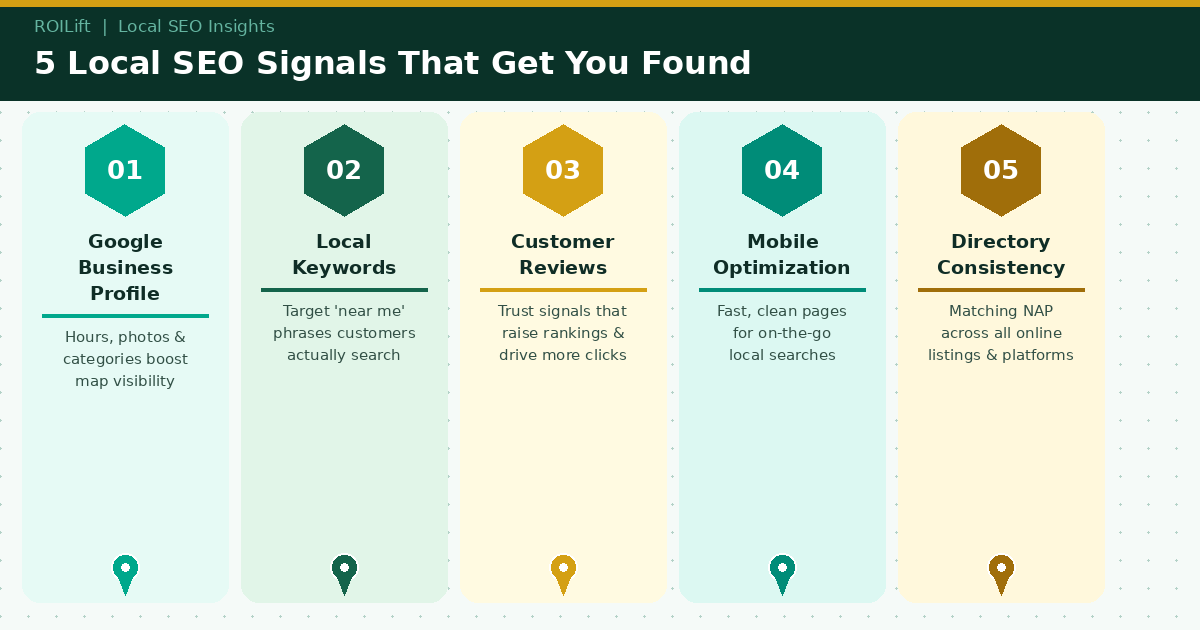
A strong local search engine optimization service often improves:
Local keyword targeting
- Website location relevance
- Search map visibility
- Directory consistency
- On-page optimization
These improvements work together. Instead of relying only on word of mouth, businesses gain a predictable way to appear in local search results.
The Role of Google Business Profiles
One of the most important pieces of local SEO is the business profile. When someone searches locally, they often see map listings before traditional website results.
A well-developed profile increases both consumer confidence and exposure.
The following details about your profile are important:
- Business hours
- Contact information
- Photos
- Service categories
- Customer reviews
Having an incomplete or outdated profile creates confusion for consumers. Search engines also give more preference to businesses that maintain accurate, active content.
Why Reviews Matter in Local Search
Reviews influence decisions. People trust feedback from other customers more than business descriptions. Positive reviews improve credibility, but they also affect local rankings. Search engines often treat reviews as a trust signal.
Businesses with strong reviews tend to attract more clicks because customers feel more confident. Encouraging reviews does not require complicated strategies. Simple follow-ups after a purchase or service often make a difference.
Local SEO and Mobile Search Behavior
Mobile search has changed how customers find businesses. People search while walking, driving, shopping, or waiting somewhere. These quick searches often lead to immediate decisions. Someone searching from a phone usually wants convenience.
A business that appears clearly in local results has a better chance of gaining that customer.
This is why a seo service firm often focuses heavily on mobile optimization alongside local search strategies.
Choosing the Right SEO Partner
When selecting a provider, look for a company that knows local competition, search behavior, and map visibility.
A reliable SEO service provider in the USA should explain:
- How Time Affects Local Rankings
- What metrics are the most important
- What optimization work was involved
- How will you measure success
- Effective communication counts.
Local SEO should be measurable, not mystifying.
Is Local SEO Worth the Investment?
For companies that depend on customers in the neighborhood, local SEO is often one of the best investments. Local SEO targets the people who are searching for a local answer, not trying to reach the masses.
And that intent matters.
By using local SEO, businesses will have access to consumers who are ready to make a purchase rather than contacting unrelated consumers.
While results from local SEO take a while to earn or build, they build lasting visibility over time to assist in generating more web traffic as well as leads.
Conclusion
Local SEO helps businesses become visible where customers are already searching. It supports nearby discovery, improves trust, and creates more opportunities for local engagement. A reliable SEO service near you helps businesses stop relying only on chance and start showing up when nearby customers are ready to choose.
At ROILift, we believe local visibility should feel practical and measurable. Our team works closely with businesses to improve rankings, strengthen search presence, and attract nearby customers through smart optimization.
If you want a reliable local SEO firm or an SEO service company in USA, we have a variety of tactics to assist your company in expanding in the areas that are important to you.
FAQs
1. What is local SEO?
Local SEO helps businesses appear in nearby search results when customers search for local products or services.
2. Why is local SEO important for small businesses?
It helps small businesses compete locally and attract customers searching nearby.
3. What does a local search engine optimization service include?
It often includes listing optimization, keyword targeting, reviews, and local website improvements.
4. How long does local SEO take to show results?
Results usually take a few months depending on competition and current online presence.
5. Does local SEO work for service businesses?
Yes, service businesses benefit because customers often search for nearby providers.
6. Why are Google Business Profiles important?
They improve visibility in map results and provide important customer information.