

Most businesses already have a website. Many stay active on social media too. On paper, that sounds enough. But customers are not as patient as they used to be. They want quicker answers, fewer clicks, and a smoother way to interact with a brand.
That shift matters more than people realize. A website helps someone find you. A mobile app helps them stay connected. There is a difference. One introduces the business. The other becomes part of the customer’s routine.
This is why custom mobile application development services are becoming more important for businesses that want long-term customer engagement instead of one-time visits.
Why Mobile Apps Matter More Than Ever
People spend hours on their phones without thinking about it. Scrolling, shopping, checking updates, comparing options. It happens throughout the day in small moments.
Businesses that fit naturally into those moments often stay relevant. A mobile app removes friction. Customers do not need to search for a website or remember where they found you. They tap once and arrive.
That small convenience changes behavior. When something feels easy, people return to it more often.
Better Customer Experience Through Custom Apps
Generic templates can handle basic functions, but they rarely match how customers actually move through a business process. Some feel cluttered. Others feel too limited.
With expert mobile application developers, businesses create features that match customer habits instead of forcing customers to adjust.
Common features include:
- Personalized dashboards
- Fast booking or checkout options
- Push notifications for updates
- Loyalty rewards
- Direct customer support access
Customers notice when something feels simple. They also notice when it feels frustrating. The smoother the experience, the easier it becomes to build repeat engagement.
Stronger Brand Visibility and Recognition
A website depends on someone searching for you. A mobile app stays visible without effort. Every time a customer unlocks their phone, your app icon sits there quietly. They may not open it every day, but they still see it.
That repeated exposure creates familiarity. Over time, familiarity builds trust. People tend to return to brands they recognize because recognition feels comfortable.
Apps also give businesses more control over branding. Colors, layout, navigation, and even tone of messaging all stay consistent. That consistency matters.
Improved Business Operations
Many people think mobile apps only help customers. That is only part of the story. Apps can improve internal workflows, too. Businesses often use apps to manage scheduling, employee communication, inventory tracking, or order updates.
Instead of jumping between systems, teams work from one place. Small improvements in efficiency add up over time.
This is another reason companies invest in customized mobile application developers. They are not only improving the customer side. They are making daily operations easier to manage.
Better Customer Data and Insights
Businesses make decisions every day. Sometimes based on numbers. Sometimes based on assumptions. Mobile apps provide clearer insight.
Apps track how users interact, what they click, how long they stay, and where they lose interest. That information helps businesses understand what works.
Useful data often includes:
- Popular products or services
- User behavior inside the app
- Engagement patterns
- Returning visitor activity
- Customer preferences over time
This information makes future decisions less random. Instead of guessing, businesses respond to real behavior.
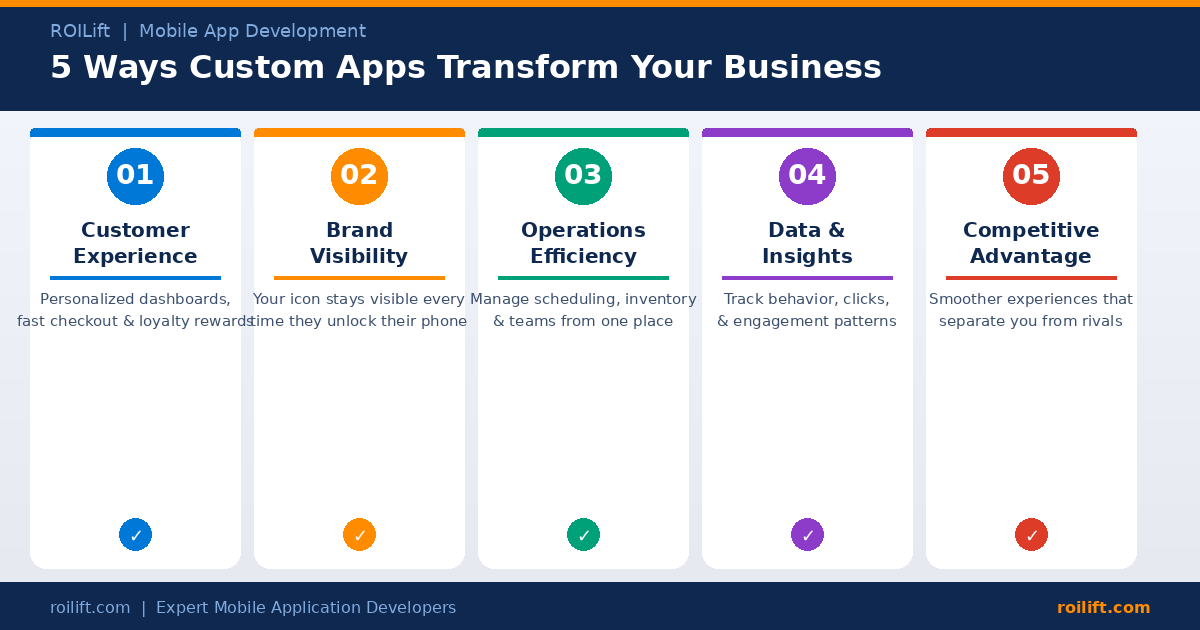
Competitive Advantage in a Crowded Market
Competition exists in almost every industry now. Customers compare businesses quickly. One poor experience is enough to lose attention. A mobile app creates an extra layer of convenience that competitors may not offer.
For service businesses, local brands, or companies with repeat customers, this matters even more. People usually return to what feels easiest.
Businesses that invest in custom mobile application development services often create smoother experiences that separate them from competitors.
It is not always about offering more. Sometimes it is about making things easier.
Long-Term Value Over Generic Solutions
Generic platforms may restrict features, integrations, or customization. As a business gets bigger, it gets harder to deal with those limits.
A company can:
- Later, add new features
- Get better over time
- Work with systems that are already in place
- Scale up or down based on what customers want
Because they can adapt over time, custom solutions are a better investment.
How Mobile Apps Support Digital Marketing
Marketing brings people in. Mobile apps help keep them there. Apps allow businesses to send reminders, offers, updates, and personalized notifications. That creates ongoing engagement instead of one-time interaction.
Apps also work well alongside SEO. For example, businesses partnering with an seo provider often combine search visibility with app engagement.
SEO helps customers discover a business online. A mobile app gives them a reason to come back. Together, they support both visibility and retention.
Final Thoughts:
Mobile apps are no longer reserved for large corporations or tech companies. They have become practical tools for businesses that want stronger customer relationships, better communication, and easier access to services. By investing in professional mobile application development assistance, a business can exert greater influence on how its customers engage with its brand.
ROILift believes that growth results from companies providing their customers with useful and easy-to-return-to experiences. We help brands achieve greater visibility and improve both engagement with their users and develop more intelligent digital strategies. If you’re interested in designing mobile application services or looking for an SEO agency in Los Angeles, we produce solutions that will help you achieve long-term value and significant business growth.
FAQs
1. What are custom mobile application development services?
These services involve building mobile apps designed specifically for a business’s needs, audience, and goals.
2. Why do businesses need custom mobile apps?
Custom apps improve customer experience, increase accessibility, and help businesses create stronger engagement.
3. Are custom apps better than template-based apps?
Custom apps offer more flexibility, branding control, and long-term scalability than generic templates.
4. How do mobile apps help customer retention?
Apps make access easier and encourage repeat interaction through notifications, rewards, and personalized features.
5. Can small businesses benefit from mobile apps?
Yes, small businesses can use apps to improve customer service, simplify bookings, and strengthen loyalty.
6. How do mobile apps support marketing?
Apps help businesses stay connected through direct communication, offers, and customer engagement tools.