

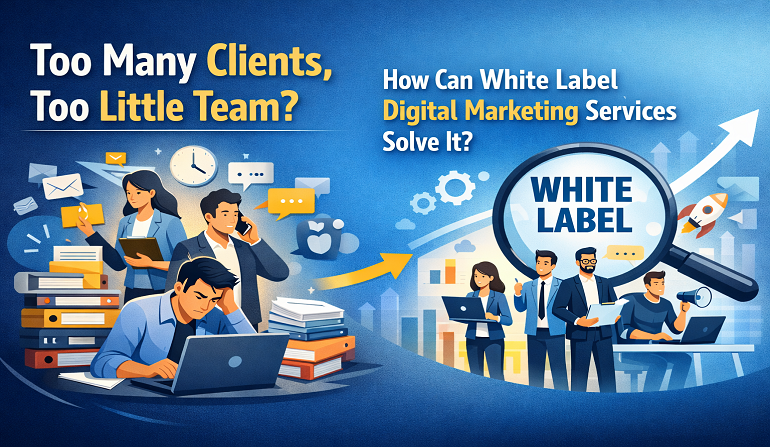
At first, more clients feel like momentum. Then the cracks start showing. Deadlines pile up. Small errors slip through. Your team starts rushing, and suddenly, the work that once felt manageable begins to feel heavy. It’s not that your agency isn’t capable. It’s just stretched. And that’s usually the point where agencies pause and ask a tough question: Do we hire more people, or is there a smarter way to handle this?
For many, white label digital marketing services end up being that “smarter way,” even if they didn’t consider it at the start.
Table of Contents:
● The Real Challenge Behind Growing Client Demand
● What White Label Services Actually Do
● Why Agencies Are Choosing This Model
● When Should You Consider White Label Support
● Key Benefits That Go Beyond Cost
● Choosing the Right Partner for Long-Term Growth
● The Role of AI in Digital Marketing Expansion
● How to Balance Cost and ROI with the Right Strategy
● How a Digital Marketing Company Helps Solve the Problem
● FAQs
The Real Challenge Behind Growing Client Demand
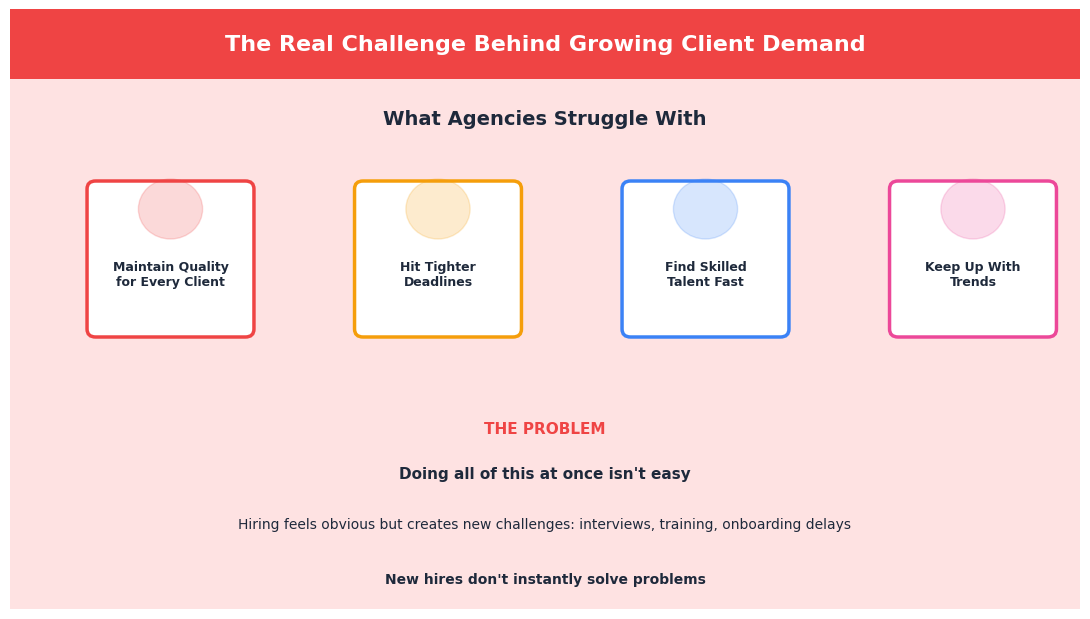
Growth brings pressure that isn’t always obvious right away. It’s not just about “more work.” It’s about keeping everything consistent while the volume increases. That’s where things start getting tricky.
You’re trying to:
- Maintain the same quality for every client
- Hit deadlines that keep getting tighter
- Find skilled people fast (without overspending)
- Keep up with trends that don’t slow down
And honestly, doing all of that at once isn’t easy.
Hiring sounds like the obvious fix. But then come interviews, training, onboarding, and the reality that new hires don’t instantly solve problems.
What White Label Services Actually Do
Think of white label digital marketing services less like outsourcing, and more like adding an invisible team. Your clients never see them. Your brand stays front and center. But the execution? That’s handled quietly in the background.
- Work gets done under your name.
- Clients still talk to you.
- You stay in control.
- But you’re no longer doing everything yourself.
It’s a small shift in structure, but it changes how your agency operates day to day.
Why Agencies Are Choosing This Model
There’s a reason more agencies are moving in this direction. It solves multiple problems at once, without creating new ones.
You get:
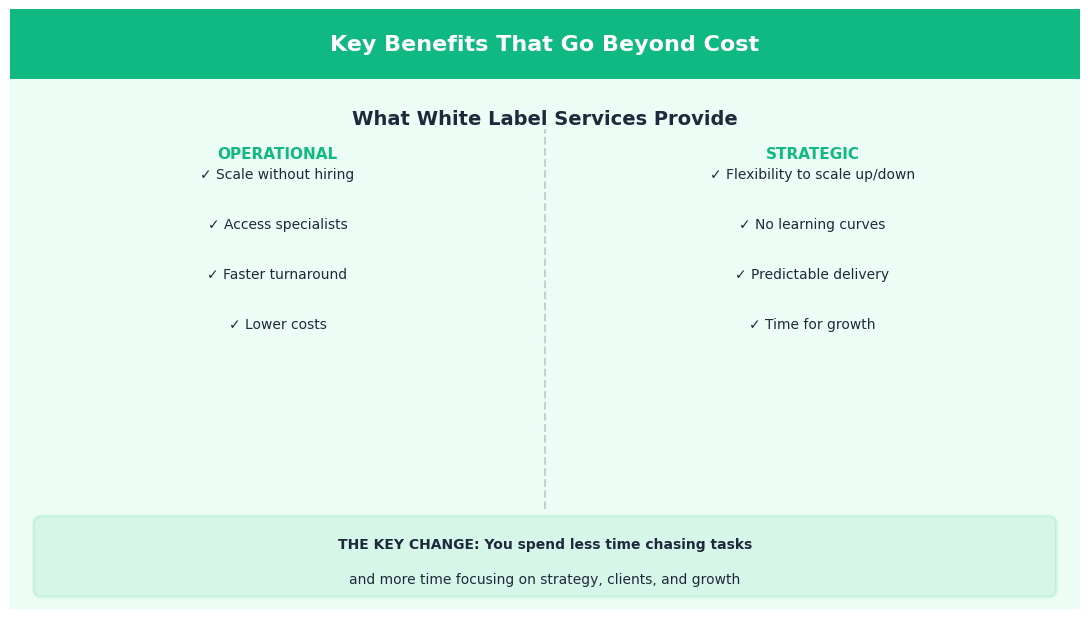
- Room to scale without constantly worrying about capacity
- Access to specialists without hiring each one individually
- Faster turnaround (because experienced people are already in place)
- Lower operational costs compared to building a full team
But more than anything, it changes your role. You spend less time chasing tasks… and more time focusing on strategy, clients, and growth.
When Should You Consider White Label Support
Not every agency needs this from day one. But there are signs. And they’re usually pretty clear when they show up.
If you’ve been:
- Missing deadlines more often than you’d like
- Saying no to new clients because you simply can’t take on more work
- Noticing inconsistencies in quality
- Spending more time managing tasks than actually growing the business, it might be time to rethink things.
A lot of agencies wait too long here. They try to “push through” instead of restructuring.
Key Benefits That Go Beyond Cost
Most people think white-label is just about saving money.
It’s not.
- Yes, it can reduce costs, but that’s only part of the picture.
- What really changes is how your agency functions.
- You get flexibility. Work increases? You scale up. Does it slow down? You scale back.
- You get access to people who already know what they’re doing, no long learning curves.
- Delivery becomes faster. More predictable.
And maybe most importantly, you get your time back. Time to focus on growth instead of constantly putting out fires.
Choosing the Right Partner for Long-Term Growth
Here’s the thing, white label only works if the partner is right. And “right” isn’t just about price.
You want someone who:
- Understands different industries
- Communicates clearly (and consistently)
- Doesn’t hide behind vague reporting
- Gets what your clients expect
- Can actually match your brand tone
Because at the end of the day, their work reflects on you.
Many agencies start by looking for something affordable, but quickly realize that cheap without quality creates bigger problems.
The Role of AI in Digital Marketing Expansion
Scaling today isn’t just about adding people. Technology is part of the equation now, especially AI in Digital Marketing. It’s changing how campaigns are run, optimized, and even planned.
Things like:
- Faster data analysis
- Better predictions for performance
- Quicker content improvements
- More precise targeting
All of this helps, but only if it’s used properly. When AI is combined with the right execution team, the results are noticeably better.
How to Balance Cost and ROI with the Right Strategy
Cost is always a concern. That’s normal. But focusing only on cost can be misleading. Hiring internally locks you into fixed expenses, salaries, tools, and overhead. White label, on the other hand, is flexible. You pay based on what you actually need.
The real question isn’t “What does it cost?”
It’s “What does it return?”
Because consistent delivery, better results, and faster turnaround all directly impact ROI. This is why you need to understand how to choose the Best Digital Marketing Company. The wrong one adds cost. The right one adds value.
How a Digital Marketing Company Helps Solve the Problem
For agencies that reach that tipping point, too much work, not enough bandwidth, Digital Marketing Company becomes a practical solution, and by providing an affordable seo service, not by replacing your team, but by supporting it.
They help by:
- Taking on execution without increasing internal workload
- Keeping SEO performance consistent across clients
- Balancing affordability with quality output
- Supporting local SEO efforts for targeted growth
- Maintaining brand consistency behind the scenes
- Improving turnaround times without adding pressure
So instead of constantly trying to “catch up,” agencies can actually move forward again.
Conclusion
Growth should feel like progress, not pressure. When your team reaches its limit, the smartest move isn’t always expansion. Sometimes, it’s collaboration. White-label solutions offer a way to scale without losing control, quality, or focus.
Roilift helps agencies turn growth challenges into opportunities by offering dependable white-label digital marketing services. They work with agencies, navigating this exact challenge and focusing on delivering reliable white-label digital marketing services that balance cost with long-term results.
Start scaling smarter with the right support today!
FAQs
What are white-label digital marketing services?
White-label digital marketing services allow agencies to outsource work (like SEO, PPC, or content) to a third-party provider, who completes it under the agency’s brand name.
How can white-label services help agencies with too many clients?
They provide extra support without hiring new staff, helping agencies manage increased workload, meet deadlines, and maintain quality.
Is white-label marketing the same as outsourcing?
Not exactly. While both involve external help, white-label services are branded as your own, so clients never know a third party is involved.
When should an agency consider using white-label services?
When facing missed deadlines, declining quality, team burnout, or when turning away new clients due to limited capacity.
What services can be white-labeled?
Common services include SEO, PPC advertising, content creation, social media management, website development, and local SEO.