SEO Content Marketing Services in Austin: When Your Service Pages Need More Than Keywords
SEO Content Marketing Services in Austin: When Your Service Pages Need More Than Keywords November 4, 2026 Dushyant Instagram Facebook Linkedin X-twitter table of Content 1.How to Compare SEO Services in Austin Before You Hire an SEO Agency 2. SEO Agency in Austin That Offers True Local Search Results 3. Transparent SEO Services For Austin Businesses 4.Local Expertise Is What Separates Austin SEO Services 5. Additional Factors to Consider For Best Local SEO Services in Austin 6.Scorecard For Your Comparison to Choose the Best SEO Agency in Austin 7. Final Words: Now You Know What You Need to Ask in Discovery Call FAQs Key Takeaways SEO copywriting services in Austin produce service pages that both rank and convert only when the page covers discovery, qualification, proof, mechanism, and decision. The common mistake is treating SEO content writing as rewriting the same page with more keywords. A credible SEO copywriter Austin businesses hire checks every page against all 5 layers before shipping, with specific proof points and a mechanism section, not just an updated meta title. If your Austin service pages rank well and still produce almost no leads, the problem is not keywords. Something in the next 90 seconds of reading sent them back to Google to try your competitor. That gap, between arrival and action, is what SEO content marketing services in Austin are supposed to close. And it closes only when the page covers five distinct reader layers, each answering a different question, with keywords doing the work of just one of them. How Competitive is Austin for content marketing? Austin is a competitive content marketing market because the buyer base is unusually sophisticated. The U.S. Bureau of Labor Statistics data for the Austin-Round Rock-Georgetown MSA also shows an above-average professional and technical employment share. Which means your service page is being judged by readers who know what good copy looks like. Moreover, thin content is something that won’t work in this market. There are certain layers every Austin service page needs. What each layer is responsible for, and why generic SEO content writing Austin plans that focus only on keyword density fail at four of the five. Discovery Stage With Content Marketing Services in Austin (Where Keywords Actually Live) Discovery is the layer that gets the page found. Keywords, headings, meta tags, schema, internal linking, and page speed all live here. This is the layer every generic SEO plan focuses on, and it is also the layer that matters least once the visitor has arrived. A page that nails this and fails the other will rank. It will also convert at 0.5% or worse, because ranking without converting is the SEO equivalent of filling a leaking bucket. What Layer 1 actually requires on an Austin service page: Primary keyword in H1, title tag, meta description, and the first 100 words. Secondary keywords worked naturally into subheadings. Schema markup for Service, LocalBusiness, FAQPage, and Review where applicable. Internal links out to related services and inbound from at least one hub page. Page speed under 2.5 seconds on mobile. A URL slug that reflects the primary keyword without stuffing. Most Austin businesses buying SEO marketing services in Austin are already decent at Layer 1 because any competent SEO tool catches these gaps. The failure is in Layers 2 through 5. Qualification (The Make-or-Break First 100 Words) Qualification is the layer that answers “is this page for me?” An Austin visitor who landed from a Google search for “commercial roofing contractor Austin” has about 10 seconds to decide whether this page describes their situation specifically or vaguely. Vague loses. A qualifying first 100 words name: Who the service is for (industry, business size, situation). What problem it solves specifically (not “all your marketing needs”). Where (Austin, which submarkets, which service areas). One disqualifying detail that proves you know the category (a specific permit, a specific vendor, a specific regulation). Here is a before-and-after that shows the Layer 2 fix most Austin service pages need: Before: We provide top-quality commercial roofing services to businesses throughout Austin. Our team of experienced professionals delivers results you can count on. Focus on customer satisfaction and competitive pricing.” After: This page is for Austin commercial property owners (warehouses, retail, mid-rise office) in Travis County who need a TPO, EPDM, or standing seam metal replacement. Austin-based, pulls permits through the City of Austin Development Services Department, and has worked on buildings in East Austin, South Lamar, Round Rock, and Cedar Park. If you own a residential property, this is not the page you want.” Service pages are not meant to retain every visitor; they are meant to qualify the right ones in and the wrong ones out. Most Austin service pages read like the first version. A credible SEO copywriter Austin businesses hire rewrites every Layer 2 to look like the second. Mandatory Proof Section (The Layer Austin Buyers Scan For Hardest) Austin buyers are proof-sensitive. The city’s dense tech and professional services workforce has been pitched for a decade by every digital marketing agency within 100 miles, and the resulting default stance is skepticism. Vague claims produce exits. Specific proof produces reads. Proof lives in four forms on an Austin service page: Case studies with real numbers (how much lift, over what time, from what starting point). Named client logos with written permission to display. Review platform scores (Google, Clutch, Yelp, G2, or category-specific platforms). Documented methodology (what you actually do, step by step, with named tools and deliverables). The weakest Austin service pages use adjectives: “proven,” “results-driven,” “trusted.” Austin buyers filter those words out before the paragraph finishes. Mechanism (How The Work Actually Happens) Mechanism is the layer most generic SEO content marketing in Austin skips entirely. Mechanism answers “what will you actually do once I hire you, in what order, with what deliverables, and when.” Austin buyers can compare SEO agencies in Austin before
AI SEO Services in New York: How to Track Whether AI Engines Mention Your Brand
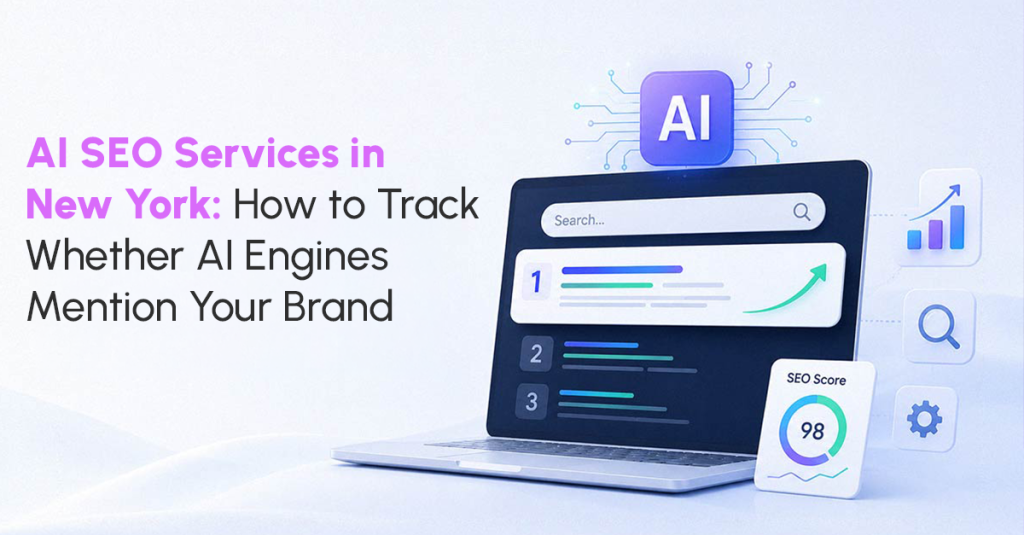
AI SEO Services in New York: How to Track Whether AI Engines Mention Your Brand November 3, 2026 fogvibrant Instagram Facebook Linkedin X-twitter table of Content 1.How to Compare SEO Services in Austin Before You Hire an SEO Agency 2. SEO Agency in Austin That Offers True Local Search Results 3. Transparent SEO Services For Austin Businesses 4.Local Expertise Is What Separates Austin SEO Services 5. Additional Factors to Consider For Best Local SEO Services in Austin 6.Scorecard For Your Comparison to Choose the Best SEO Agency in Austin 7. Final Words: Now You Know What You Need to Ask in Discovery Call FAQs Key Takeaways A monthly audit says a lot about how your AI campaign is running through the competitive market of New York. The reporting should consist of how much of our target we have achieved and whether the queries have been met or not. Credible AI search visibility New York tracker records 15 to 25 queries per month across ChatGPT, Perplexity, Claude, and Google AI Overviews; logs mention rank. Knowing how many AI mentions my business earned last month compared to the month before is an essential evaluation for businesses in New York. New York has the densest, fastest-cycling AI query ecosystem in the US. AI engines refresh their NY result sets faster than other metros, and tracking has to run on a tighter cadence to catch what moved. Here is the exact monthly tracking protocol a NY business should run, or a credible GEO services New York provider should run for them. The Monthly AI SEO Services in New York Mention Audit: What To Actually Record While partnering with an AI SEO and GEO service agency, keeping track becomes essential. The campaign is either producing citations that AI engines are trusting, or it is not. And the only way to know is to measure it on a repeatable schedule using queries that reflect how NY buyers actually search. A credible monthly audit is not a vague “did we show up more.” It is a documented table that answers five questions on the same day each month. Step 1: Build Your Query Matrix Google Search Central documentation on structured data confirms that properly implemented schema (LocalBusiness, Service, FAQPage, Author, Review) is a direct input into how Google’s AI surfaces, including AI Overviews. Your query matrix is a fixed list of 15 to 25 queries that reflect how NY buyers search for your category. Generic category queries. Borough or submarket queries: “best commercial real estate attorney in Brooklyn,” “SoHo real estate lawyer,” “Williamsburg family dentist.” Price-point queries. Trust-signal queries. Pick 15 to 25 queries that cover your top 3 service lines and your top 3 geographic submarkets, lock the list, and run them unchanged for at least 6 months. Step 2: Run the Matrix Across Four Engines on the Same Day Run every query on your matrix across ChatGPT, Perplexity, Claude, and Google AI Overviews on the same calendar day each month. AI engines refresh their indexes on different cycles, and comparing results pulled across different days introduces noise that masks real signal. Pick the first Tuesday of each month, block three hours on your calendar, and run the full matrix in one sitting. Step 3: Record Mention Rank, Citation Source, Competitor Position For every query, every engine, every month, record: Did your business get mentioned? Rank in the response. The citation source the engine pulled from (your site, Yelp, Google, a press mention, a Reddit thread). Top three competitors mentioned and their rank order. Any new business mentioned this month that was not in last month’s result. The last line is the one most tracking tools miss. New entrants to the AI result set are the leading indicator of a competitor doing effective AI SEO work. Catching them early tells you where to pay attention. Step 4: Compare to Last Month and Flag Deltas Every monthly audit produces a report that fetches the entire citation report; it should include which queries gained a mention. Which lost one and which saw rank changes of two or more positions. A delta of two or more positions in either direction is actionable. Positive deltas mean recent optimization work is compounding, and you double down. Negative deltas mean something broke in your citation ecosystem (a review platform update, a lost press mention, a competitor’s new content), and you investigate within 10 business days. Step 5: Tie Every Delta to a Specific Cause The hardest part of credible AI tracking is attribution, and this is what sets a benchmark for choosing the SEO agency in New York when the market is competitive. When a mention appears or disappears, you need to know why. The documented causes that produce most NY mention changes: A press mention published in credible sources like NYT, Village Voice, Curbed NY, StreetEasy, or an industry trade. A review velocity spike or drop on Google, Yelp, or a vertical-specific platform. A Reddit thread on r/NYC, r/AskNYC, r/newyorkcity, r/brooklyn, r/manhattan, r/queens, or r/bronx that gained engagement. A structured data change on your site. A new competitor landing page that captured citation share. An AI engine update that reshuffled result sets. Your monthly report should name the cause for every delta, or flag it as “cause unknown, under investigation.” NY-Specific Query Types Most Businesses Miss The query matrix most generic SEO agencies in New York plan to build for a NY business tracks only generic category queries. That misses the four query types that actually produce most of NY’s AI mention volume. Borough And Submarket Queries NY buyers specify geography far more granularly than buyers in any other US metro. “Best coffee shop” produces one result set; “best coffee shop Williamsburg” produces an entirely different set with almost no overlap. Track submarket queries for every submarket you serve: Manhattan submarkets (SoHo, Tribeca, Chelsea, West Village,
AI SEO Services in Los Angeles: How To Improve Your AI Search Visibility
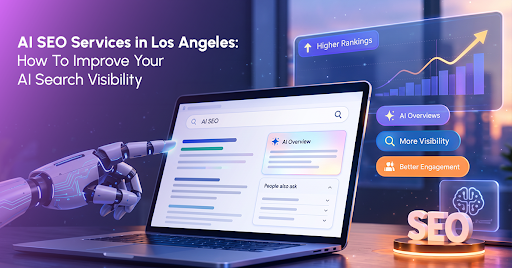
AI SEO Services in Los Angeles: How To Improve Your AI Search Visibility October 30, 2026 Dushyant Instagram Facebook Linkedin X-twitter table of Content 1.How to Compare SEO Services in Austin Before You Hire an SEO Agency 2. SEO Agency in Austin That Offers True Local Search Results 3. Transparent SEO Services For Austin Businesses 4.Local Expertise Is What Separates Austin SEO Services 5. Additional Factors to Consider For Best Local SEO Services in Austin 6.Scorecard For Your Comparison to Choose the Best SEO Agency in Austin 7. Final Words: Now You Know What You Need to Ask in Discovery Call FAQs Key Takeaways AI SEO services in Los Angeles behave differently from any other US metro because of media ecosystem.. Yelp, LA Weekly, LA Times, LAist, and Eater LA carry heavier AI citation. The biggest mistake LA businesses make is treating English and Spanish AI queries as the same market. A credible AI search optimization Los Angeles plan monitors mentions in both languages across all four AI engines monthly. The LA metro is a different kind of search market. The U.S. Census Bureau’s demographic profile for Los Angeles County shows nearly half the county’s population identifies as Hispanic or Latino. This drives measurable Spanish-language AI query volume no other US metro matches at this scale. If you are buying AI SEO services in Los Angeles, make sure your current retainer accounts for these patterns. Your mentions are getting captured by competitors who do, not because they outspent you, but because they understood what LA looks like through an AI engine’s eyes. Here’s what reshapes the AI in Los Angeles. Entertainment-Adjacent Businesses Dominate Non-Entertainment Queries Run “best accountant Los Angeles” across all four AI engines, and you will see firms that market themselves as “entertainment industry CPAs” appearing in results that have nothing to do with Hollywood. Same for lawyers, dentists, dermatologists, and fitness studios. The reason is that LA’s media ecosystem produces unusually high citation density for businesses in or adjacent to entertainment, and AI engines carry that citation weight forward even when the query is generic. What this means for ChatGPT SEO Los Angeles work: if your business can honestly claim an entertainment-industry client base, it produces disproportionate AI citation lift. Even for category-generic queries, the entertainment angle acts as a credibility multiplier. What this does not mean: fabricating celebrity clients or inventing a Hollywood connection. AI engines cross-reference claims across sources, and inconsistency flags you as unreliable. The pattern rewards earned entertainment credibility, not performative claims. Spanish and English AI Queries Return Different Winners Ask ChatGPT “mejor plomero en East LA” and compare the result list to “best plumber in East LA.” Different businesses. Perplexity, Claude, and Google AI Overviews show the same pattern. Spanish-language AI queries pull from a different corpus of sources (Spanish-language reviews, bilingual directories, Spanish Yelp coverage, Univision-adjacent coverage) and return businesses that have built credibility in that ecosystem. For AI SEO and GEO services, Los Angeles providers working in a city where 48% of the county is Hispanic or Latino, bilingual content is not optional. What matters: Dedicated Spanish-language versions of your top 5 service pages, written by a native speaker, not machine-translated. Spanish-language reviews on Google and Yelp, in whatever volume your Spanish-speaking patient base genuinely produces. Mentions in Spanish-language local publications where relevant. Spanish-language author bylines on content where the subject matter calls for them. Any business serving Boyle Heights, East LA, Highland Park, Lincoln Heights, parts of Mid-City, Koreatown, or the South LA submarkets, operating in English-only AI SEO, is leaving a measurable share of citations on the table. Yelp Carries Heavier AI Citation Weight in LA Than Elsewhere Yelp was founded in San Francisco, but Los Angeles is one of its most mature markets. AI engines reflect that: queries across all four AI engines, Yelp pages appear as cited sources far more often than they do. The pattern holds for professional services too: law firms, financial advisors, therapists. Treat your LA Yelp profile as a core AI SEO asset, not a legacy review platform. What matters: Profile completeness, including services, hours, photos, business attributes, and FAQ-shaped responses to common Yelp inquiries Review velocity, not just review volume. A profile with 400 reviews from 2019 but zero from this year loses to a profile with 80 reviews, all from the last six months Response rate on every review, positive and negative, within 24 hours Photos uploaded by your business, not just customer photos, matching the categories you serve Celebrity, Influencer, and Press Mentions Produce Outsized Citations In most US metros, a press mention in a local publication carries moderate AI citation weight. In Los Angeles, a mention in reputed press can produce AI citations for months afterward, well beyond what the raw link equity suggests. If an influencer with a credible audience names your business in a post, blog, or video, AI engines pick up that signal and surface your business in related queries, even when there is no backlink. The citation is not the link, it’s the trusted mention. What this means for SEO services in Los Angeles budgets: A credible digital PR line item targeting LA Times, LAist, Eater LA, LA Mag, Timeout LA, Hollywood Reporter, Variety, and relevant trade press. An influencer relationship program for your category, not a one-off sponsored post. Press release distribution through services that get picked up by LA-adjacent outlets. Monitoring brand mentions across linked and unlinked sources, which is where most tracking tools fall short. If your current retainer only tracks backlinks, you are measuring half of what actually produces AI citations in LA. Neighborhood-Specific Queries Produce Distinct Result Sets Run “best coffee shop Silver Lake” against “best coffee shop Highland Park” against “best coffee shop Venice.” Three different result lists across all four AI engines, with very little overlap. LA submarkets function as distinct search markets, and the top three results in each submarket
AI SEO Services in Phoenix: What It Takes to Show Up in AI-Generated Local Recommendations
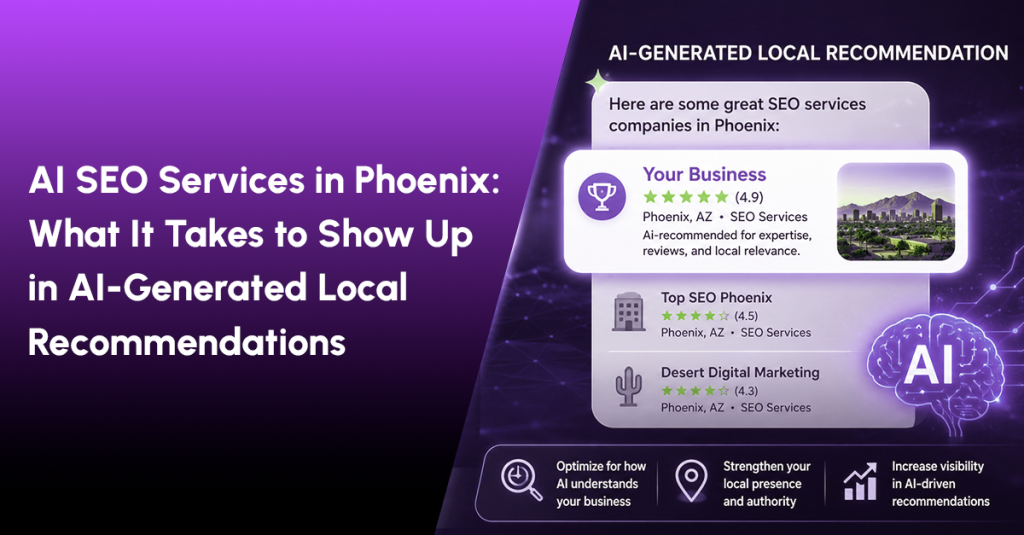
AI SEO Services in Phoenix: What It Takes to Show Up in AI-Generated Local Recommendations October 30, 2026 fogvibrant Instagram Facebook Linkedin X-twitter table of Content 1.How to Compare SEO Services in Austin Before You Hire an SEO Agency 2. SEO Agency in Austin That Offers True Local Search Results 3. Transparent SEO Services For Austin Businesses 4.Local Expertise Is What Separates Austin SEO Services 5. Additional Factors to Consider For Best Local SEO Services in Austin 6.Scorecard For Your Comparison to Choose the Best SEO Agency in Austin 7. Final Words: Now You Know What You Need to Ask in Discovery Call FAQs Key Takeaways AI SEO services in Phoenix require a different plan for each AI engine, because ChatGPT, Perplexity, Claude, and Google AI Overviews read different sources and weigh them differently when picking which businesses to cite. The biggest mistake Phoenix businesses make is optimizing for “AI search” as if it is one monolithic surface. It is four surfaces with four different rulebooks, which is why your Google-ranking-one competitor is sometimes invisible on Perplexity. A credible AI search optimization Phoenix plan tracks mentions across all four engines monthly, with query-by-query breakdowns, so you know which engine is working for which category of buyer. Open four tabs. ChatGPT in one. Perplexity in another. Claude in the third. Google in the fourth, with a query that triggers an AI Overview. Ask all four, “best commercial roofing company in Phoenix.” The lists you get back will not match. Not because one is right and the others are wrong, but because each AI engine reads from a different mix of sources and ranks them by different weights. That is the central fact behind AI SEO services in Phoenix in 2026. Each AI engine works and fetches the data with different algorithms, and this is where professional AI SEO services come into play. Optimizing Search Surfaces: A Phoenix Business Imperative Optimization is not for one surface; it is for four, and the plan has to adapt to each. Phoenix is also a market where this matters right now. The Pew Research Center’s data on AI chatbot adoption shows adoption rising fastest among professional and college-educated audiences. Mapping directly to the knowledge-worker influx Phoenix has absorbed in recent years from Intel, TSMC, and the fintech and crypto firms expanding into the metro. Phoenix buyers are among the earliest to use AI engines for business discovery, and the businesses that get cited by those engines are claiming inventory most competitors have not even measured. The Four AI Engines Your Phoenix Buyers Actually Use Each engine reads from a different mix of sources. Here is what each one is weighing when it decides whether to mention your Phoenix business. ChatGPT ChatGPT runs in two modes that matter for Phoenix local recommendations. Browsing Mode: When the user has web search enabled, or ChatGPT decides the query needs fresh data: pulls near-live from indexed web pages, review sites, directories, and Reddit. For a “best plumber Phoenix” query, it typically grabs top-ranked Google results, Yelp pages, Reddit threads, and sometimes press mentions. Non-browsing mode: For Phoenix businesses, AI SEO and GEO services means your citations are decided by what the model learned months ago, not what is on the web today. The signals that matter here: brand mentions across trusted publications before the training cutoff, Wikipedia or Wikidata presence, structured data on your site, consistent entity information across the open web. What to do for ChatGPT visibility in Phoenix: Earn mentions in Phoenix publications. Build a credible, consistent entity profile across LinkedIn, Crunchbase, Clutch, G2, and Phoenix-specific directories. Keep structured data implemented on every money page. Participate authentically in r/phoenix, r/scottsdale, r/tempe, r/mesa, r/asu. Perplexity Perplexity pulls live web results on every query and shows its sources openly, which means you can watch exactly which pages fed each answer. For Phoenix business queries, Perplexity typically cites top organic search results, directory sites (Clutch, Yelp, Expertise), review platforms, and recent news coverage. The lever here is traditional SEO plus freshness. If your business ranks in the top three organic results for a query, Perplexity almost certainly cites you. If it does not, Perplexity reaches into directory and review sources to fill the picture, which is why you can appear in Perplexity even without ranking page one on Google. What to do for Perplexity visibility in Phoenix: Rank in the top five organic Google results for your target queries. Maintain updated listings on Clutch, G2, Expertise.com, Thumbtack, Yelp, Angi, and Phoenix-specific directories. Publish freshness signals: recently updated pages, dated reviews, recent press mentions. Get mentioned in recent Phoenix news coverage, even unlinked. Claude Claude’s web search is more selective about sources, favoring reputable publications and well-structured content over directories. For Phoenix business queries, Claude tends to weigh editorial sources (news outlets, trade publications, established review sites) heavily and discount thin directory pages. What this means in practice: Claude is harder to win in than Perplexity, but the citations it does produce carry higher trust signals, which can matter when a Phoenix buyer is making a larger purchase decision. What to do for Claude visibility in Phoenix: Prioritize editorial mentions over directory listings. Build authority through Phoenix trade press. Named-author content with real credentials on your own site. Clear entity positioning: one specific sentence describing what you do. Google AI Overviews Google AI Overviews pull from Google’s own index, which means traditional on-page SEO signals carry more weight here than in any other AI surface. If you rank well in organic search for a query, you have a strong shot at being cited in the AI Overview for that query. What to do for Google AI Overviews visibility in Phoenix: Standard SEO fundamentals: content depth, backlinks, Core Web Vitals, schema. Google Business Profile completeness and review signals. Answer-first content structure that Google’s featured snippet logic also rewards. E-E-A-T signals: named authors, author
AI SEO Services in Austin: How To Get Your Local Business Mentioned in AI Answers
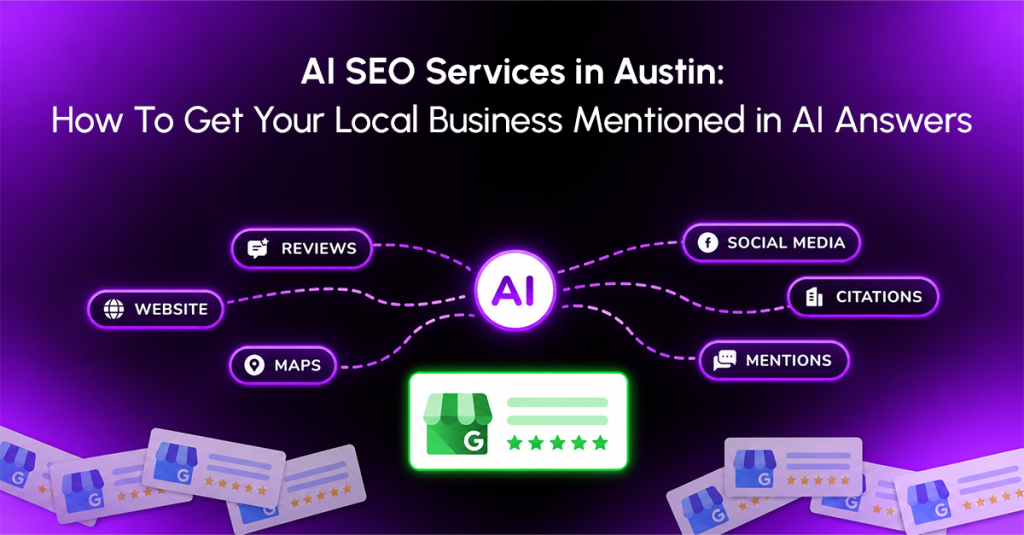
AI SEO Services in Austin: How To Get Your Local Business Mentioned in AI Answers October 30, 2026 fogvibrant Instagram Facebook Linkedin X-twitter table of Content 1.How to Compare SEO Services in Austin Before You Hire an SEO Agency 2. SEO Agency in Austin That Offers True Local Search Results 3. Transparent SEO Services For Austin Businesses 4.Local Expertise Is What Separates Austin SEO Services 5. Additional Factors to Consider For Best Local SEO Services in Austin 6.Scorecard For Your Comparison to Choose the Best SEO Agency in Austin 7. Final Words: Now You Know What You Need to Ask in Discovery Call FAQs Key Takeaways AI SEO services in Austin focus on five specific ingredients. Schema markup, named author credentials, and third-party brand mentions matter more for AI citations than they do for traditional Google rankings. The biggest mistake Austin businesses make is treating AI SEO as “better regular SEO.” Open ChatGPT right now and ask it to recommend a plumber, lawyer, SaaS tool, or restaurant in Austin. Businesses showing up are the ones winning AI SEO services in Austin, whether they bought the service or not. Those citations are not random; AI engines combine specific ingredients to decide which businesses get named in their answers. Reverse-engineer those ingredients, and you can systematically earn mentions. Ignore them and your competitor earns the mention instead, every time. Why AI SEO is as Important as Traditional SEO? Austin is a city where this matters sooner than most. Austin has one of the highest concentrations of early AI tool adopters in the country, driven by the city’s tech workforce. The Pew Research Center’s data on AI tool adoption shows faster uptake among college-educated and professional audiences, which maps directly to Austin’s buyer base. Winning AI mentions here is not a 2027 problem. It is a right-now problem. The Citation Formula AI engines (ChatGPT, Perplexity, Claude, Gemini, Google AI Overviews) do not use one simple ranking signal. They combine five specific ingredients, and the business that gets cited is the one that scores highest across all five. Here is the formula, in the order AI engines weigh it. LocalBusiness schema on your homepage and location pages. Service schema on every service page, with specific service names. FAQPage schema on your FAQ sections and FAQ-shaped content. Author schema with real credentials on content pages. Review schema where legitimate (never fabricated). Product schema on ecommerce or SaaS pricing pages. Your business is invisible to the layer AI engines parse before they decide what to quote. With it, you become machine-readable in a way most Austin competitors still are not. Brand Mentions on Trusted Third-Party Sites This is the biggest difference between AI SEO and GEO services and traditional SEO. AI engines heavily weight your brand name appearing on sites they consider authoritative, even without a backlink. A mention of your business on Austin Monitor, the Austin American-Statesman, KXAN, Community Impact, or an industry publication counts, even if the mention is not linked. For GEO services Austin to work, your plan has to include: Digital PR to Austin publications (Austin American-Statesman, Austin Monitor, Austin Business Journal, Community Impact Austin, Austonia, KXAN, KUT, KVUE) Industry publication mentions in your vertical Podcast appearances where your founder or domain expert is named Guest contributions and bylines in trade press Being quoted in news articles about your industry (reactive PR) Traditional link building gets you half credit here. Named brand mentions in editorial content, linked or unlinked, get full credit. Answer-Shaped Content on Your Own Site AI engines prefer content that is written in answer form. A direct answer in the first sentence, with evidence after. Content built for 2015-era SEO (introduction, context, history, then the answer buried in paragraph seven) rarely gets quoted. What answer-shaped content looks like: H2 headings written as questions a buyer actually types The first sentence of each section answers the heading directly Short declarative sentences, not meandering explanatory ones Named author with credentials visible at the top of the content A “last updated” date that is recent (AI engines favor fresh content for time-sensitive topics) If your current Austin SEO content opens with “In today’s fast-paced digital landscape,” no AI engine will ever quote you. Review Signals and Trust Signals Across the Open Web AI engines sample reviews from multiple platforms before describing a business, not just Google. What matters: Consistency of your business name, address, and phone across platforms. Review sentiment that holds up across platforms, not just on Google. Reddit mentions of your brand in subreddits relevant to your category and city. Reddit comments carry disproportionate weight for AI engines right now. Entity Recognition and Knowledge Graph Presence AI engines map businesses as entities with relationships, not as isolated web pages. The clearer and more specific your entity profile is across the web, the more confidently an AI engine will quote you. Where entity signals live: Your Google Business Profile (completeness, categories, services, Q&A). Wikipedia or Wikidata entries where you qualify (for larger businesses). Crunchbase, LinkedIn Company Page, Facebook Business Page, Bing Places. Industry-specific entity databases. Press release services with persistent URLs. Gaps, inconsistencies, or duplicate entries weaken your entity signal, which weakens your citation odds. How to Test Your Current AI Visibility Yourself You do not need expensive software to run a first-pass audit. In 20 minutes, you can score your business across the four main AI engines. Open each of these engines in a private browser window (so personalization does not skew the result): ChatGPT Perplexity Claude Google AI Overviews (search a query that triggers one) Run three types of queries: Best [your category] in Austin.” Note whether your business appears. Note which competitors do. [Your category] in [your submarket]” (e.g., “coffee roasters in East Austin,” “immigration lawyers in Downtown Austin”). More specific queries sometimes surface different businesses than citywide queries. [Your business name] reviews” or “is [your business name] good.” Note how each
Dental SEO Services in Los Angeles: The Search Terms That Matter Before a Patient Books
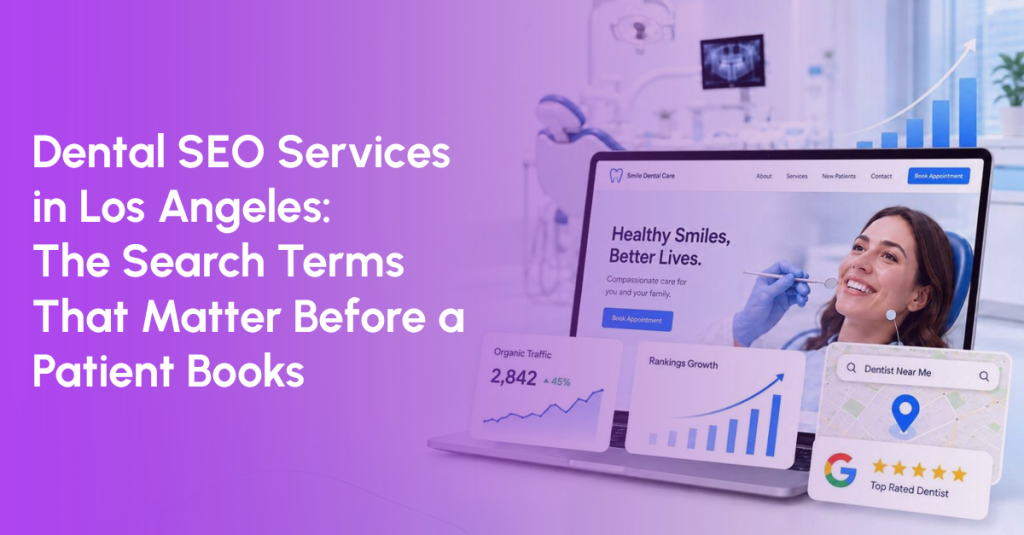
Dental SEO Services in Los Angeles: The Search Terms That Matter Before a Patient Books October 30, 2026 fogvibrant Instagram Facebook Linkedin X-twitter table of Content 1.How to Compare SEO Services in Austin Before You Hire an SEO Agency 2. SEO Agency in Austin That Offers True Local Search Results 3. Transparent SEO Services For Austin Businesses 4.Local Expertise Is What Separates Austin SEO Services 5. Additional Factors to Consider For Best Local SEO Services in Austin 6.Scorecard For Your Comparison to Choose the Best SEO Agency in Austin 7. Final Words: Now You Know What You Need to Ask in Discovery Call FAQs Key Takeaways The highest-intent query is never “dentist near me.” It is a specific procedure name paired with a submarket or a trust signal. Review signals and author credentials matter more in dental SEO Los Angeles than in most local service categories. A credible SEO for dentists Los Angeles retainer tracks bookings by query type, not just rankings or traffic, so you can see which search intent actually fills your schedule. A patient searching for a dentist in Los Angeles does not type one query or an entire book in one go. Queries move forward over the course of two or three days, as their decision gets clearer. Each query signals a different intent and requires a different piece of content to intercept it. Most dental SEO services in Los Angeles target only the generic query. Here’s how the content should move and how the dental SEO services in Los Angeles will help you with it. The Six-Query Ladder a Patient Climbs Before Booking Dentistry sits inside what Google’s Search Quality Rater Guidelines treat as a Your Money or Your Life (YMYL) category. This means the content standard, author credential bar, and review signals all weigh more heavily than in other local service categories. Think of patient search as a ladder, not a single query. Each rung has a different intent and a different converting content type. Symptom Query Patients at the bottom of the ladder search symptoms first and not the solutions. “Why does my tooth hurt when I bite down,” “jaw pain on one side,” “sensitive teeth cold water.” These are not booking queries yet; they are information queries. What content wins here: Symptom guides that explain probable causes in plain language, with author credential signals. Content that names when to see a dentist versus wait, which builds trust before the sale. Internal links down the ladder to procedure pages. Most dental SEO company in Los Angeles retainers skip this entirely. That is fine as a strategic choice. Diagnosis Query Once the symptom gets a name, the patient searches the diagnosis. “What is a cracked tooth,” “symptoms of a root canal infection,” “signs of gum disease.” Still mostly informational, but now specific. What needs to be developed here: Condition pages that explain what the diagnosis actually means. Original clinical photography where legitimate. References to peer-reviewed sources or ADA guidance, which lift YMYL credibility. Content marketing services at this rung should feel like a dentist wrote it, because Google’s helpful content signals weight that in YMYL categories. Solution Query These are the queries where SEO for dentists in Los Angeles starts to produce real revenue, because the patient is comparing procedures and prices. Procedure pages with real cost ranges. Comparison content. Author bylines from a specific dentist on your team, not a generic “team” byline. FAQ sections handling the uncomfortable questions. Provider Query This is where the local pack dominates and where Google Business Profile signals outweigh website content. What plays as an arsenal here is: Google Business Profile completeness. Reviews on Google first, with velocity, not just volume. Submarket-specific landing pages. Open now” accuracy on evenings and Saturdays, because weekend emergencies drive high-value bookings. Trust Query Before booking, patients research the dentist specifically, doctor reviews, complaints, and pricing. Even if your website never ranks for these, the way the SERP displays other people’s reviews and content about you decides whether the patient calls. What matters here: Response rate to Google and Yelp reviews (positive and negative). Author pages on your own site with real credentials, publications, and years practicing. An “About the Dentist” page that actually reads as a dentist wrote it. Third-party review platform profiles (Healthgrades, Zocdoc) kept current. The Decision Query The Centers for Disease Control and Prevention’s oral health data documents how often adults search for dental care across the US, and that volume concentrates in metros like Los Angeles with wide income and insurance variation. All of that shapes how dental SEO Los Angeles actually works. “Dentist near me open Saturday,” “emergency dental Los Angeles’ queries convert at the highest rate but have the lowest volume. What content wins: Mobile-first booking page that loads in under two seconds A tracked phone number above the fold Clear hours, parking information, and insurance accepted Online booking link if your practice management system supports it The LA-Specific Signals That Change the Game Three LA realities shift the dental SEO plan beyond the generic playbook: Spanish-Language Search In East LA, Boyle Heights, Koreatown, Mid-City Google processes Spanish-language queries from these submarkets differently, and bilingual landing pages (not just translations) rank where English-only pages do not. If your practice serves these neighborhoods and your dentist SEO Los Angeles plan is English-only, you are missing a measurable share of bookings. Celebrity and Media-Adjacent Cosmetic Dentistry Beverly Hills and West Hollywood have unusually high “celebrity cosmetic dentist” and “veneer influencer” query volume. These queries convert at very high per-patient value when the content and author credentials match the search intent. Insurance Network Complexity Los Angeles has one of the most fragmented dental insurance networks in the US. “In-network dentist Delta Dental Pasadena” and similar queries convert well because many patients filter by insurance before anything else. If your service pages do not name the insurance networks you accept, you
Plumbing SEO Services in Austin: Where Local Search Leads Actually Come From?
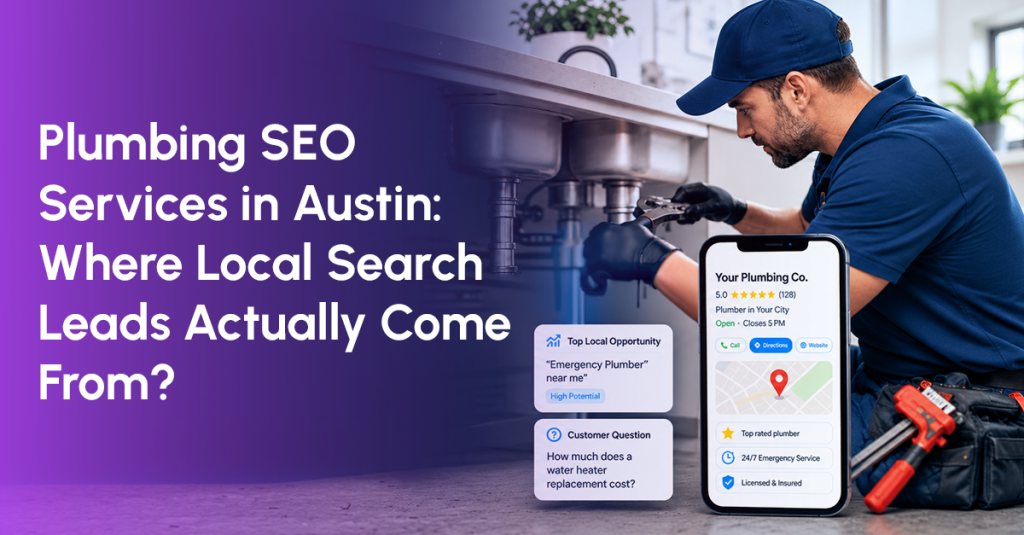
Plumbing SEO Services in Austin: Where Local Search Leads Actually Come From? October 30, 2026 fogvibrant Instagram Facebook Linkedin X-twitter table of Content 1.How to Compare SEO Services in Austin Before You Hire an SEO Agency 2. SEO Agency in Austin That Offers True Local Search Results 3. Transparent SEO Services For Austin Businesses 4.Local Expertise Is What Separates Austin SEO Services 5. Additional Factors to Consider For Best Local SEO Services in Austin 6.Scorecard For Your Comparison to Choose the Best SEO Agency in Austin 7. Final Words: Now You Know What You Need to Ask in Discovery Call FAQs Key Takeaways Google Business Profile and review velocity are the two biggest levers for Austin plumbers, well ahead of website content or backlinks. The most common mistake is treating the website as the primary lead source. For plumbing, the website is often the third-ranked lead source behind GBP and review platforms. A credible plumber SEO Austin retainer measures leads by source, not just by website traffic. Austin is a plumbing-dense market that is influenced by real weather pressure. Environmental conditions and an increase in population shape the plumbing SEO services in Austin landscape. Usually, emergency and recurring call volumes are high, which means the way leads actually arrive is more varied than most plumbers assume. The Seven Real Lead Sources for Austin Plumbers The City of Austin’s water quality data notes that Austin water sits in the hard-to-very-hard range, which drives recurring call volume for scale buildup, water heater issues, and fixture problems. And the brutal truth is not every lead comes from Google or from the website. Here is the honest ranking, by volume, for a mature single-location plumbing operation in Austin. Most Lead Generation: Google Business Profile and the Map Pack GBP is the number one source of first-time plumbing leads in Austin, by a wide margin. Google’s documentation of local ranking factors names relevance, distance, and prominence as the three signals that decide the local pack, and prominence is driven heavily by reviews. For emergency queries like “plumber near me” or “burst pipe Austin,” the map pack takes the vast majority of clicks before the website appears. What a credible plumbing marketing Austin plan does for GBP every month: 5 to 7 posts (Job completion, Team photos, before and after, if appropriate). Track and respond to all reviews within 24 hours. Keep services and categories up-to-date when your service mix changes. Get honest feedback on seed quality from actual buyer questions and answers. Monitor monthly ranking positions of your top 10 queries for each of your submarkets. If your retainer spends more on blog posts than on GBP, you are pointed at the wrong source. Review Sites (Google, Yelp, Nextdoor, Angi, Thumbtack) Review sites are the second-largest source of first-time leads, and the first-largest source of warm leads from buyers already comparing options. What matters here: Volume: Your competitors likely have hundreds of reviews. New entrants need 10 to 15 new reviews per month, every month. Velocity: Google weighs recent review activity. 20 old reviews from 2022 lose to 20 fresh reviews from this quarter. Response Rate: Respond to every review, both positive and negative, within 24 hours. Platform Spread: Google first, then whichever platform your buyers actually use. Service Pages on Your Own Website While comparing SEO services in Austin, ensure they stress creating individual service pages. It wins the specific queries that GBP cannot answer. What converts on a service page: Strong grasp of submarkets, e.g., “serving Austin, Pflugerville, Round Rock, Cedar Park, Georgetown.’ A clear price range or starting price, even if the final quote varies. Tracked phone number prominent on mobile, within the first scroll. Reviews or testimonials embedded on the page, with real client first names and dates. What underperforms: generic “benefits of hiring a professional plumber” blog posts, 400-word thin service pages, and anything with no local context. Direct Searches When you have been in a business for years, and locals are directly searching your business on Google. It’s a clear sign your business has reached a credible stage. These show up in Search Console as branded searches, and they usually convert at the highest rate of any source. Most plumbers never measure this, which means they underinvest in brand presence for returning buyers. Referrals from Realtors, Property Managers, and Insurance Adjusters Austin’s real estate market generates steady plumbing lead volume through three professional networks. Realtors handling pre-sale inspections, property managers handling tenant repairs, and insurance adjusters handling water damage claims after a freeze. This source does not come from SEO directly. It comes from presence: your business showing up when a realtor Googles “plumber Round Rock” to recommend one, or when an insurance adjuster searches for an approved vendor. GBP, reviews, and a credible website support this source without any content work. Social Media and Nextdoor Posts Austin has a specific social media pattern for plumbing. Neighborhoods like Mueller, East Austin, and the Lake Travis area are rarely sourced by SEO work directly, but your SEO signals (reviews, GBP) support the sale once the neighbor-recommended lead starts researching. Paid Search and Local Service Ads Google Local Services Ads and Google Ads sit at the top of the search page but produce leads at a higher cost per lead. This mode of funnel can also be considered while partnering with an SEO agency in Austin for your plumbing service. They are useful in summer and winter emergency windows, less useful in steady months. The right play is to use paid for near-term pipeline while SEO compounds in the background, and to run both channels against the same booked-call metric. The Austin-Specific Signals Most Plumbers Miss Three Austin realities shift the lead-source ranking above: Freeze-event spikes When a winter storm hits Austin, emergency plumbing search volume spikes 10x inside 48 hours. If your GBP is slow to respond with
HVAC SEO Services in Phoenix: What It Takes to Turn Search Into Service Calls

HVAC SEO Services in Phoenix: What It Takes to Turn Search Into Service Calls October 28, 2026 fogvibrant Instagram Facebook Linkedin X-twitter table of Content 1.How to Compare SEO Services in Austin Before You Hire an SEO Agency 2. SEO Agency in Austin That Offers True Local Search Results 3. Transparent SEO Services For Austin Businesses 4.Local Expertise Is What Separates Austin SEO Services 5. Additional Factors to Consider For Best Local SEO Services in Austin 6.Scorecard For Your Comparison to Choose the Best SEO Agency in Austin 7. Final Words: Now You Know What You Need to Ask in Discovery Call FAQs Key Takeaways HVAC SEO services in Phoenix win or lose at the Google Business Profile and map pack level, not the website level, because the search is almost always urgent and almost always on mobile. Review velocity is the single biggest lever most Phoenix HVAC companies underfund, and it moves the local pack faster than content or links. Content for HVAC marketing Phoenix should answer specific service questions a homeowner types during an outage, not generic “benefits of a tune-up” articles. A credible HVAC SEO Phoenix retainer connects every monthly report to booked service calls, not traffic. If calls are not in the dashboard, the campaign is not being measured against the thing that matters. Phoenix is the hottest part of the US. The National Weather Service Phoenix Forecast Office records regular stretches of 115°F-plus temperatures across the Phoenix-Mesa-Chandler metro. And each summer, the query for “AC not working” rises, which is the opportunity for HVAC contractors in this city. Every HVAC search in July or August is a buyer standing in a hot house, phone in hand, scrolling the map pack for the first business that looks competent and reachable. That is the real buyer behavior behind HVAC SEO services in Phoenix. This piece is about building for it. What a Phoenix HVAC Search Actually Looks Like The buyer behavior in HVAC search is not like other local services. Three patterns show up consistently: Mobile-first and urgent: Most searches happen from a phone, in a hot house, at a hot time of day. Page speed matters at the physical device level, not just as a Google ranking signal. Map pack dominant: The three local pack results take the vast majority of clicks for emergency HVAC queries. If you are not in the top three, you are competing for scraps. Call-driven, not form-driven: HVAC buyers call, they do not fill out forms. GBP “call” taps and tracked phone numbers on your site are the real conversion metric, not form submissions. This changes what SEO for HVAC companies in Phoenix actually has to deliver. Rankings and traffic are secondary. Phone rings are the real scoreboard. The Phoenix HVAC Call Funnel Think of the campaign as a four-stage funnel. Every stage has a specific lever, and every stage has to be measured. Stage 1: Query to Impression The homeowner types “AC repair near me,” “emergency AC Chandler,” or “HVAC Scottsdale open now.” Your job is to appear in that result set. What makes you appear: Google Business Profile completeness and category accuracy Service area pages that match submarkets (Tempe, Mesa, Scottsdale, Chandler, Gilbert, Glendale, Peoria, Surprise, Avondale, Goodyear) Business hours accurately marked as “open now” when relevant Proximity to the searcher, which you cannot control but can influence through location pages What to track: impressions in Search Console for emergency and submarket queries, and GBP Insights for views by category of query. Stage 2: Impression to Click The homeowner types “AC repair near me,” “emergency AC Chandler,” or “HVAC Scottsdale open now.” Your job is to appear in that result set. What makes you appear: Rating above 4.5 stars. Review count that is competitive with your top three local competitors. At least 10 photos on the GBP, including team and equipment shots. A GBP description that names your service area and specialties plainly. Open” status when the search happens, especially on weekends and evenings. What to track: GBP calls, direction requests, and website clicks against impressions. Stage 3: Click to Call Once they click, the homeowner lands on your GBP card or a service page. Your job is to get them to tap the call button. What drives the call: A prominent, tracked phone number above the fold on mobile. A clear “we serve your area” signal. Social proof (reviews, badges, service years) within the first scroll. A page that loads in under 2 seconds on mobile per Google’s Core Web Vitals thresholds, documented in Google Search Central’s page experience guidance. What to track: tracked phone calls from organic and from GBP, call duration (shorts calls that disconnect fast often indicate a mismatch), and bounce rate on service pages. Stage 4: Call to Service If calls are coming in but not converting to booked work, that is a dispatcher problem, not an SEO problem, and your HVAC marketing Phoenix campaign cannot fix it. But the agency should still measure it. What to track: booked calls divided by total calls from organic. If that number drops below 50%, run a call-audit week before changing the SEO agency in Phoenix. Why GBP Beats Your Website for Phoenix HVAC Most HVAC companies spend 80% of their SEO budget on their website and 20% on GBP. HVAC businesses in Phoenix should flip that. The local SEO service pack is where the clicks live, and the local pack is driven by Google Business Profile signals, not your website. What a credible HVAC SEO Phoenix retainer does to your GBP every month: Posts 4 to 8 updates with photos (truck photos, team photos, service completions where legitimate). *Monitors and responds to every review within 24 hours. *Updates services and categories as your service mix changes. *Adds 10 to 20 new photos monthly, geotagged where supported. *Runs Q&A seeding and monitoring, so buyers see answers before they call. *Tracks
SEO Services in Seattle: What Changes When You’re Competing in a Tech-Heavy Market?
SEO Services in Seattle: What Changes When You’re Competing in a Tech-Heavy Market? October 28, 2026 fogvibrant Instagram Facebook Linkedin X-twitter table of Content 1.How to Compare SEO Services in Austin Before You Hire an SEO Agency 2. SEO Agency in Austin That Offers True Local Search Results 3. Transparent SEO Services For Austin Businesses 4.Local Expertise Is What Separates Austin SEO Services 5. Additional Factors to Consider For Best Local SEO Services in Austin 6.Scorecard For Your Comparison to Choose the Best SEO Agency in Austin 7. Final Words: Now You Know What You Need to Ask in Discovery Call FAQs Key Takeaways SEO services in Seattle operate on a higher content floor than most US metros. AI search visibility is non-optional in Seattle. The tech-market playbook does not apply to every Seattle business. Local service businesses with consumer audiences should run a standard local SEO plan, not a tech-market one. We get the inquiry every time. Our product sits in a Seattle tech category. Why does that matter for SEO services in Seattle specifically? It matters because a generic SEO playbook plan won’t work here. The buyer base is more technical than almost any other US metro, and a generic “fix titles, publish blog posts, build links” plan assumes you are running a generic plan. So What Changes With SEO Services in Seattle? First and foremost, the content floor is higher. The average Seattle B2B SaaS or cloud competitor publishes benchmark posts, documentation, and comparison pages that already satisfy the standards Google published in its helpful content guidance. Your services retainer should fund one benchmark-grade comparison page a month. Apart from this, two documentation-style tutorials per month, one data study or original research piece per quarter, and ongoing GBP and local work only if you have a physical office that walk-ins can reach. Content with a technical author’s byline and real benchmarks will out-earn 20 generic blog posts every quarter. Additionally, if your SEO company’s plan does not include an AI visibility layer with AI SEO and GEO services, you are leaving a disproportionate amount of Seattle buyer intent on the table. How Do I Tell If My Seo Agency In Seattle Can Actually Execute? Ask for three content samples that would pass a product manager’s review. Not blog posts. Comparison pages, benchmarks, or tutorials. If the agency has to go find them from “a previous project we did years ago,” or if the samples are 600 words with no numbers in them, they will not survive against Seattle’s content floor. Also ask who writes. If the content team has no engineering, data, or domain backgrounds, their output will read like marketing copy to your buyers. Furthermore, what needs to be evaluated is: Link strategy for tech publications: Can the agency name actual Seattle and national tech outlets they have placed links in? Their AEO reporting infrastructure: Not a line item in a slide deck. A real monthly report that shows whether your business is being cited in ChatGPT, Perplexity, Claude, and Google AI Overviews, with the actual queries that trigger those citations. Access policy: Google Search Console, Google Analytics 4, and Google Business Profile in your name, not theirs, from week one. Their response to a core update: Ask them what they did for a current client after the last Google core update. If the answer names a specific client, a specific drop or gain, and a specific action taken within 10 business days, they are the one who knows the playground. Signals That a Particular SEO Agency in Seattle Won’t Survive Visit the agency’s blog. Read three posts. If their own site is 800-word listicles with generic SEO advice and no data behind any claim, that is exactly what your retainer will produce. Agencies cannot write content for your audience that they could not write for themselves. Their content is an honest preview of your content. Four more honest signals you can read in under 10 minutes: No named author on their blog posts: If their own writers hide behind “team” bylines, your content will have the same anonymous feel, and AI engines and Google’s helpful content system both penalize that in 2026. No case studies with real numbers: Vague “we grew traffic” claims with no client name, no date, no starting position. If their own proof is thin, your proof will be thinner. A pricing page that only says “contact us for a custom quote.”: This signals the agency charges each client whatever they can get, not against a documented service tier. Their own site is not fast: If a Seattle SEO services provider cannot pass Core Web Vitals on their own domain, they will not fix yours. When This Seattle SEO Playbook Does Not Apply to You The tech-market shifts matter when at least one of these applies to your business: *When your buyer is a technical professional, developer, data analyst, or engineering decision maker *The competition is a software, cloud, SaaS, or technical services company that publishes at depth *Your product solves a technical problem that benefits from documentation-style content If none of these sounds like it resonates with you, your Seattle SEO services plan should look like a standard local or SMB plan. A Capitol Hill coffee shop or a Fremont retail store is not competing against a tech brand for anything. Running the tech-market playbook on a non-tech business inflates the budget and produces content your actual buyers do not care about. The ROILift SEO Service Approach to Seattle What makes ROILift different and a leading SEO company in Seattle is structured data on every money page. Real credentials marked for E-E-A-T, and monthly tracking of brand mentions across ChatGPT, Perplexity, Claude, and Google AI Overviews. Content writing services that produce content written by writers with product and B2B backgrounds. Comparison pages are benchmarked against real competitors
How Much Do SEO Services in Indianapolis Cost?
How Much Do SEO Services in Indianapolis Cost? October 28, 2026 fogvibrant Instagram Facebook Linkedin X-twitter table of Content 1.How to Compare SEO Services in Austin Before You Hire an SEO Agency 2. SEO Agency in Austin That Offers True Local Search Results 3. Transparent SEO Services For Austin Businesses 4.Local Expertise Is What Separates Austin SEO Services 5. Additional Factors to Consider For Best Local SEO Services in Austin 6.Scorecard For Your Comparison to Choose the Best SEO Agency in Austin 7. Final Words: Now You Know What You Need to Ask in Discovery Call FAQs Key Takeaways Compare deliverables, not just monthly retainers. SEO packages can range from basic Google Business Profile management to comprehensive campaigns. Request a detailed, data-backed quote. Bought links, spam tactics, and low-value automated content can put your website at risk, so avoid cheap SEO tactics. Treating SEO services cost in Indianapolis as a budget line is how most campaigns end up being a flat line. This piece is about the math underneath the price tag. Before we get to the math, one piece of context that explains why SEO pricing in Indianapolis sits where it does. According to the U.S. Small Business Administration’s 2024 metropolitan profile, small businesses accounted for 99% of businesses in the Indianapolis metro area and employed 43.1% of its workforce. This highlights the importance of making marketing investments count, especially for businesses working with limited budgets Rewriting the Question You Should Actually Ask Most buyers walk into an SEO conversation asking, “What does this cost per month?” That question has no useful answer. A $500 retainer that produces nothing is more expensive than a $4,000 retainer that produces 40 qualified leads a month. The right opening question is: “How many leads does this retainer need to produce for me to break even, and how long will that take?” With this, you stop comparing retainer numbers across agencies and start comparing lead math. The Three Cost Drivers in Indianapolis Three variables decide where your pricing for SEO services in Indianapolis lands. Any credible provider should price against these before quoting. Driver 1: Your Category’s Ranking Difficulty A Fountain Square cafe, a Mass Ave law firm, and a Carmel orthodontist compete in three different search markets. The difficulty of your category decides how much content and link work the campaign actually needs. Google itself documents this in Google Search Central’s guidance on how Search works, where relevance, quality, usability, and context all contribute to ranking. The more competitive your category, the more work each of those four requires. Three brackets: Low to medium competition: Specialty retail, niche B2B, suburban services. Expect $1,000 to $2,000 a month. Medium competition: Home services, dental, HVAC, local professional services. Expect $1,500 to $3,500 a month. High competition: Personal injury law, cosmetic surgery, cosmetic dentistry, bariatric medicine, real estate. Expect $3,500 to $7,500 a month. Driver 2: Your Site’s Starting Position A site with 50 referring domains, clean technical health, and already-indexed service pages starts cheaper, because the basics are already cleared. A fresh or neglected site starts more expensive, because the first 90 days have to rebuild technical foundations before any growth work compounds. If LCP, INP, and CLS are not in the “Good” range, every other investment runs into a slower ceiling, which means the retainer has to do remedial work before compounding work. Driver 3: Your Number of Locations Each location is another Google Business Profile, another set of citations, and another local landing page. This creates price variance, as SEO services in Phoenix cost different from Indianapolis. The SEO packages Indianapolis providers quote should scale cleanly with location count, not multiply by it. Two locations is not twice the price. Four locations usually is. What Each Monthly Budget Actually Buys You Instead of starting with a budget and asking what it buys, start with the output you need and work backward. Here is what each price point realistically produces for a single-location Indianapolis SMB in a medium-competition category. Monthly spend Realistic output Under $500 A freelancer handling GBP, basic on-page edits, and 1 to 2 blog posts $750 to $1,500 Full local SEO, 2 to 4 content pieces, light technical work, light outreach, basic reporting $1,500 to $2,500 Technical SEO depth, 4 to 6 content pieces, named account manager, review generation workflow, dashboard reporting $2,500 to $5,000 Multi-channel strategist, 6 to 10 content pieces, active outreach, structured link building, lead attribution reporting $5,000+ Full team: strategist, content lead, outreach lead, technical specialist, custom dashboards tied to revenue Note what this table does not say. It does not say the $500 package will produce leads. It says what the money buys you in terms of work hours and deliverables. Whether that work actually produces leads depends on your category, your site, and the agency’s execution, not the retainer size alone. The ROI Math in Three Simple Steps With ROILift Any SEO services cost Indianapolis conversation should end with a math check. ROILift uses this exact three-step frame on discovery calls, because it is the fastest way to size a retainer against reality instead of hope. Step 1. Multiply your average customer value (one deal, not lifetime) by your typical close rate on qualified leads. That is your value per qualified lead. Step 2. Divide the proposed monthly retainer by that number. The result is the number of qualified leads the retainer needs to produce each month to break even on cost. Step 3. Ask the agency whether that lead number is realistic for your category and your site, at month six and at month twelve. If the answer is no, the retainer is wrong-sized. If the answer is yes with specifics, you have a plan. Why Cheap SEO Is Almost Always the Most Expensive Option The temptation to pick the $300 package is real. Why it usually fails is that the